
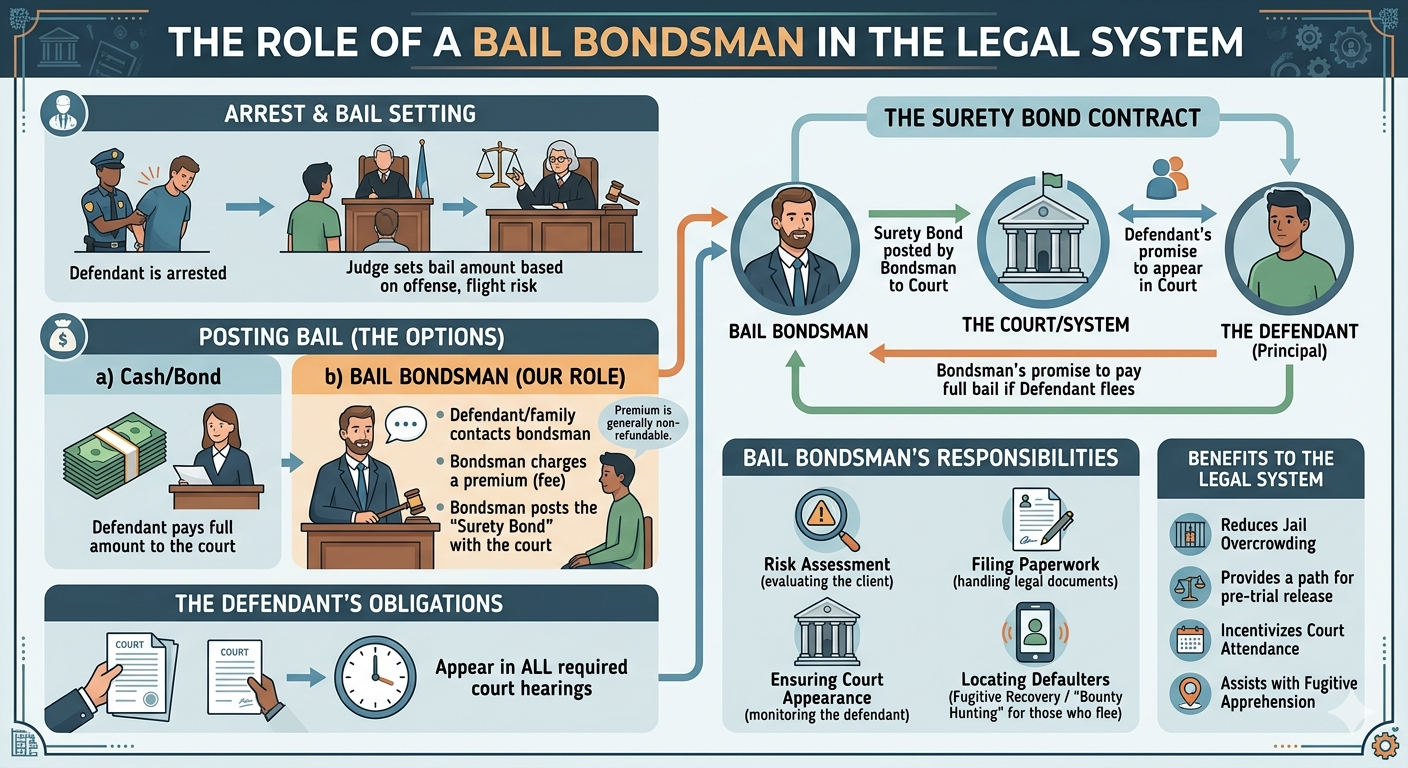
An arrest can turn an ordinary day into a confusing chain of phone calls, court terms, and urgent decisions. A family may hear words like bond, bail, release conditions, court date, and surety before they understand what comes next. In that stressful moment, a bail bondsman often becomes the person who explains the release process in plain language and helps a defendant return home while the case moves forward. For families looking for 24/7 bail bonds in North Carolina, that support can matter at any hour because arrests do not follow a daytime schedule.
A bail bondsman does not decide whether someone is guilty or innocent. A bondsman also does not set the bail amount. The court handles those decisions. The bondsman’s role begins after a judge or magistrate sets release terms that allow a person to leave jail before the case ends. In the legal system, pretrial release refers to the conditions a defendant must follow between the filing of charges and the final court outcome. Courts decide whether a defendant may be released while waiting for future hearings.
What a Bail Bondsman Actually Does
A bail bondsman helps secure a defendant’s release when the court allows a secured bond. In simple terms, the bondsman provides a financial promise to the court. That promise says the defendant will return for court dates and follow release conditions.
The process often starts with a call from a family member, friend, or the defendant. The bondsman gathers basic details, such as the person’s full name, jail location, charges, bond amount, and court information. Then the bondsman explains the cost, paperwork, responsibilities, and next steps.
The customer usually pays a nonrefundable bond fee. A co-signer may also sign an agreement. That co-signer accepts responsibility for helping make sure the defendant appears in court. If the defendant misses court, the bond can be forfeited, and the co-signer may face financial consequences.
This is why a good bondsman takes time to explain the agreement. The goal is not only to post bond quickly. The goal is to make sure everyone understands what they are signing.
How Bail Fits Into the Court Process
Bail exists within the larger idea of pretrial release. In federal court, the law starts with a general presumption that defendants should be released before trial unless the government proves at a detention hearing that detention is needed because of danger to the community or risk of flight. Courts must also consider the least restrictive conditions that can reasonably assure court appearance and public safety.
State courts follow their own laws and local rules. In North Carolina, pretrial release may include several forms, such as a written promise to appear, an unsecured bond, custody release, secured bond, or electronic house arrest with a secured bond. A bail bondsman usually becomes involved when a secured bond is required.
That detail matters. Not every person arrested needs a bondsman. Some people may receive release on written promise or unsecured bond. Others may face conditions that do not involve money. Some may remain in custody depending on the charge, prior record, risk factors, or court findings.
A bondsman works inside this court structure. They do not replace the judge, the attorney, or the clerk. They help carry out one part of the release process when the court allows bond.
Why Families Call a Bondsman
Most families call a bondsman because they feel lost. They may not know where their loved one is being held. They may not understand the bond amount. They may not know how fast release can happen or what the paperwork means.
A professional bondsman can answer practical questions, such as:
- Where is the defendant being held?
- What bond amount did the court set?
- What information does the family need to provide?
- What fee applies to the bond?
- What does the co-signer agree to do?
- What happens after release?
- Why is the court date so important?
This guidance can reduce panic. It also helps the family avoid costly mistakes. Missing court can create more legal trouble. It can also place the bond at risk. A bondsman reminds the defendant and co-signer that release comes with duties.
A Bondsman’s Responsibility After Release
The work does not always end when the defendant leaves jail. A bail bondsman may keep contact with the defendant, remind them about court dates, and make sure they understand release conditions.
If a defendant plans to move, change phone numbers, or travel, the bondsman may need updates. These details help the bondsman manage risk and help the defendant stay accountable.
A bondsman may also explain what can happen if the defendant misses court. In many cases, the court may issue an order for arrest or mark the bond for forfeiture. The bondsman may then take steps allowed by law to locate the defendant and resolve the missed appearance.
This part of the job requires professionalism. A bondsman must balance speed, service, risk, and legal rules. In North Carolina, bail bondsmen are licensed through the North Carolina Department of Insurance, which provides licensing resources, renewal information, complaint options, and license status tools.
What a Bail Bondsman Does Not Do
A bail bondsman has limits. Knowing those limits protects the defendant and the family.
A bondsman does not provide legal defense. That is the attorney’s job. A bondsman should not tell a defendant how to plead, what motions to file, or how to handle trial strategy.
A bondsman does not erase charges. Posting bond only helps secure release while the case continues. The criminal charge still moves through court.
A bondsman does not control the court schedule. Court dates come from the court system. The defendant must track them and appear as required.
A bondsman does not set bail. Judges or magistrates decide release conditions based on the law, the case facts, and local procedures.
These boundaries matter because families often need both a bondsman and an attorney. Each serves a different role.
The Human Side of Bail Bonds
The legal system can feel cold from the outside. Forms, jail windows, court calendars, and case numbers can make people feel like they have no control. A bondsman often steps into that gap.
A steady bondsman explains what can happen next. They tell the family what information is needed. They answer late-night calls. They help people understand the difference between release and case resolution. They also remind defendants that showing up to court protects their freedom and the person who signed for them.
That human support does not change the legal process, but it can make the process easier to manage. A defendant who returns home can speak with family, contact an attorney, keep working, arrange transportation, and prepare for court. That can make a real difference during a difficult time.
Choosing the Right Bail Bondsman
Families should look for a bondsman who communicates clearly, answers questions, explains fees, and treats people with respect. Fast service matters, but honest service matters too.
Before signing, ask what the fee covers, what the co-signer must do, what happens if the defendant misses court, and how to stay in contact. Good communication at the start can prevent problems later.
A bail bondsman plays a practical and serious role in the legal system. They help defendants secure release when the court allows bond. They help families understand the next step. They also help the court by backing the defendant’s promise to appear.
For fast help, clear guidance, and dependable support after an arrest, contact Freedom Fast Bail Bonds. Whether you need a reliable traffic bond service or help understanding the bond process, Freedom Fast Bail Bonds is ready to respond with professional service when your family needs it most.
By: M N Farooq

