
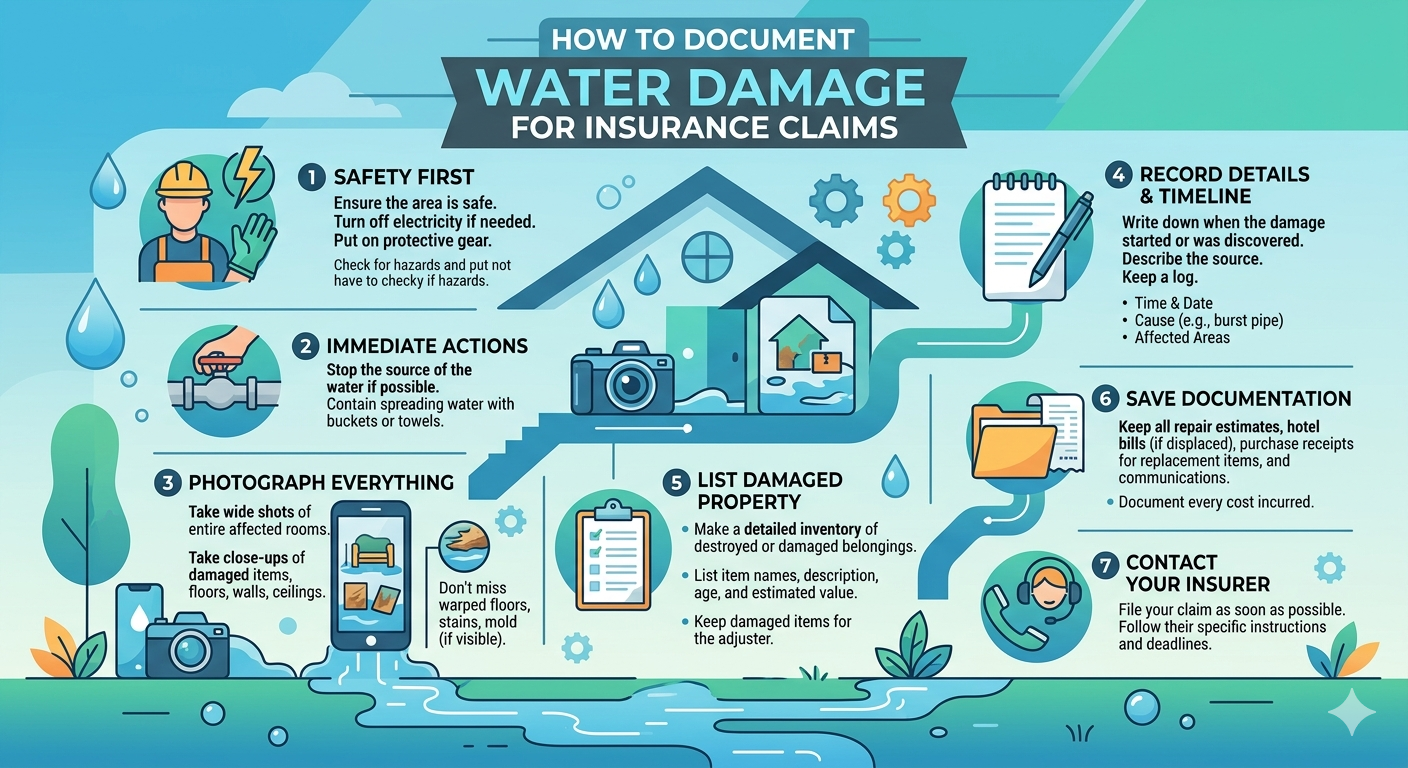
Water damage does not wait for a calm day. A pipe bursts behind a wall. A washer overflows during a busy morning. A storm sends water through a weak spot near the roofline. In the first few minutes, most people grab towels and buckets. That makes sense. But once the immediate danger is under control, documentation matters. Good records can help your insurer understand what happened, what was damaged, and what work was needed. If you need fast help with mitigation restoration Austin TX, start the cleanup process while also building a clear claim file.
Start With Safety, Then Capture the Scene
Before you take photos, make sure the area is safe. Do not step into standing water if outlets, cords, or appliances may be exposed. Shut off the water source if you can do it safely. If the damage came from a burst pipe, appliance leak, toilet overflow, roof leak, or storm event, write that down right away.
Once the space is safe, take wide photos first. Stand at the doorway and photograph the full room. Show the walls, ceiling, floors, furniture, cabinets, and the path the water took. Then move closer. Take pictures of stains, swollen trim, wet drywall, buckled flooring, soaked carpet, damaged furniture, and water marks.
Video helps too. Walk through the affected area slowly. Speak while recording. Say the date, time, room name, and what you see. For example, “Water entered from under the bathroom vanity and spread into the hallway.” Simple narration can give your claim file more context.
The Insurance Information Institute recommends contacting your insurance professional right away, preparing for the adjuster’s visit, photographing or recording the damage, making reasonable temporary repairs, and saving receipts for those costs.
Document the Source of the Water
Insurance companies often look closely at the source of water damage. A sudden pipe break may be handled differently than long-term seepage. Flooding may fall under a separate flood policy. A roof leak may depend on the cause and policy terms. Your job is not to decide coverage. Your job is to record what you can see.
Take photos of the likely source. Capture the broken pipe, failed supply line, leaking water heater, damaged roof area, clogged drain, appliance hose, or window leak. If the source is hidden, document the visible signs. That might include water dripping from a ceiling, bubbling paint, damp baseboards, or water moving from one room to another.
Do not throw away failed parts too soon. If a plumber removes a broken supply line or appliance hose, ask to keep it until the adjuster gives direction. Take photos before and after removal.
Also write a short timeline. Include when you first noticed the water, who found it, what was happening at the time, and what steps you took. A timeline can help separate sudden damage from older stains or unrelated repairs.
Build a Room-by-Room Damage Inventory
After the first photos, slow down and make a list. Go room by room. List every damaged item you can identify. Include furniture, rugs, electronics, clothing, books, tools, appliances, cabinets, flooring, drywall, trim, insulation, and personal items.
For each item, write:
- Item name and brand, if known
- Model or serial number, especially for electronics and appliances
- Approximate age
- Purchase price, if you remember it
- Current condition
- Photos from several angles
- Receipts, manuals, or online order records, if available
The National Flood Insurance Program advises policyholders to take photos and videos, copy receipts, record serial numbers, and create an itemized list of damaged belongings during the flood claim process.
If you do not have receipts, do not stop. Look through email confirmations, credit card records, online shopping accounts, product manuals, and old home photos. Even family photos can show what furniture or appliances were in a room before the water damage.
Keep Proof of Emergency Work
Most insurance policies expect homeowners to take reasonable steps to prevent more damage. That may include shutting off water, covering an opening, moving dry items away from wet areas, using safe temporary repairs, or calling a water damage restoration company.
The National Association of Insurance Commissioners advises homeowners to prevent further damage with essential temporary repairs, keep all emergency repair receipts, and avoid permanent repairs before talking with the insurer or agent.
This matters because water damage can spread fast. Wet drywall can soften. Flooring can swell. Cabinets can warp. Moisture can move behind baseboards. Mold may grow when moisture stays in place.
Keep every receipt connected to the loss. Save invoices for plumbers, restoration crews, tarps, fans, dehumidifiers, hotel stays, storage, cleaning supplies, and emergency materials. Take photos of mitigation equipment in place. Ask the restoration team for moisture readings, drying logs, photos, estimates, and a work summary.
Organize Every Claim Conversation
A good water damage claim file includes more than photos. It also includes communication records. Create one folder on your phone or computer. Name it by date and address. Keep photos, videos, invoices, estimates, emails, adjuster notes, and policy documents in that folder.
Write down every call. Include the date, time, person’s name, company, phone number, and what you discussed. Ask for your claim number. Ask what documents the insurer needs. Ask when the adjuster will inspect the home. Ask whether you need repair estimates before work begins.
The NAIC guide also recommends asking for contact names, claim numbers, filing deadlines, deductible information, coverage details, adjuster timing, and any special claim procedures when reporting damage.
Clear records reduce confusion. They also help if several people become involved, such as an adjuster, contractor, plumber, restoration company, or mortgage company.
Do Not Let Cleanup Erase the Evidence
You should not leave unsafe water or contaminated materials in place just to wait for an adjuster. Health and safety come first. Still, you should document before disposal when possible.
Take photos of damaged carpet before removal. Photograph wet drywall before cutting. Record damaged personal items before placing them outside. Separate damaged items from undamaged ones when you can. If something smells, leaks, or creates a health risk, photograph it first, then follow safe disposal guidance.
Ask your insurance company what they want saved. Some adjusters may want to see flooring samples, appliance parts, or damaged contents. If you are unsure, take more photos than you think you need.
A Strong Claim File Tells a Clear Story
The best water damage documentation tells the story from start to finish. It shows where the water came from. It shows how far it spread. It shows what was damaged. It shows what you did to prevent more damage. It shows what professionals found during inspection and drying.
You do not need fancy equipment. A phone camera, a notebook, a folder, and steady attention can make a big difference. Take wide shots. Take close-ups. Record video. Save receipts. Keep damaged items when safe. Track every call. Ask clear questions. Keep copies of everything.
Water damage already brings enough stress. A clear record can help you stay organized while your home moves from emergency response to drying, repair, and recovery.
For fast response, careful documentation support, and professional drying services, contact emergency water removal Austin TX. Legacy Water Restoration can help protect your property, reduce further damage, and support your next steps after a water emergency.
By: M N Farooq

