
A garage door does more than close off a space. It shapes the front of the home, protects stored items, and handles daily movement through heat, rain, wind, and humidity. That is why the material matters. Some homeowners want the strength of steel. Some want the warmth of wood. Others prefer a lighter, cleaner, and more modern option. This is where aluminum garage doors often enter the conversation. If you are comparing materials or scheduling garage door maintenance in Parkland, it helps to understand how aluminum performs before you choose a new door.
Aluminum garage doors have changed a lot over the years. Older aluminum doors were often thin and easy to dent. Newer models offer stronger frames, better finishes, glass panel options, insulation choices, and a sleek look that fits many home styles. Still, aluminum is not right for every property. The best choice depends on your home design, budget, climate, daily use, and long-term maintenance goals.
What Makes Aluminum Garage Doors Different?
Aluminum is lighter than steel and wood. That lighter weight can reduce strain on the garage door opener, springs, rollers, and tracks. A lighter door may also move more quietly when the full system is installed and balanced correctly.
Many aluminum garage doors use a frame-and-panel design. Some include frosted glass, tinted glass, clear glass, or solid aluminum panels. This gives homeowners more design freedom. An aluminum and glass garage door can make a home look modern without adding heavy visual weight.
Aluminum also resists rust better than standard steel. That makes it appealing in humid areas or places where moisture is a regular concern. The surface may still oxidize or show wear over time, but it does not rust in the same way untreated steel can.
Another difference is style. Aluminum often works well on contemporary homes, coastal-style homes, mid-century designs, and commercial-inspired residential properties. It can also suit garages used as gyms, studios, workshops, or hobby spaces because glass panels can bring in more natural light.
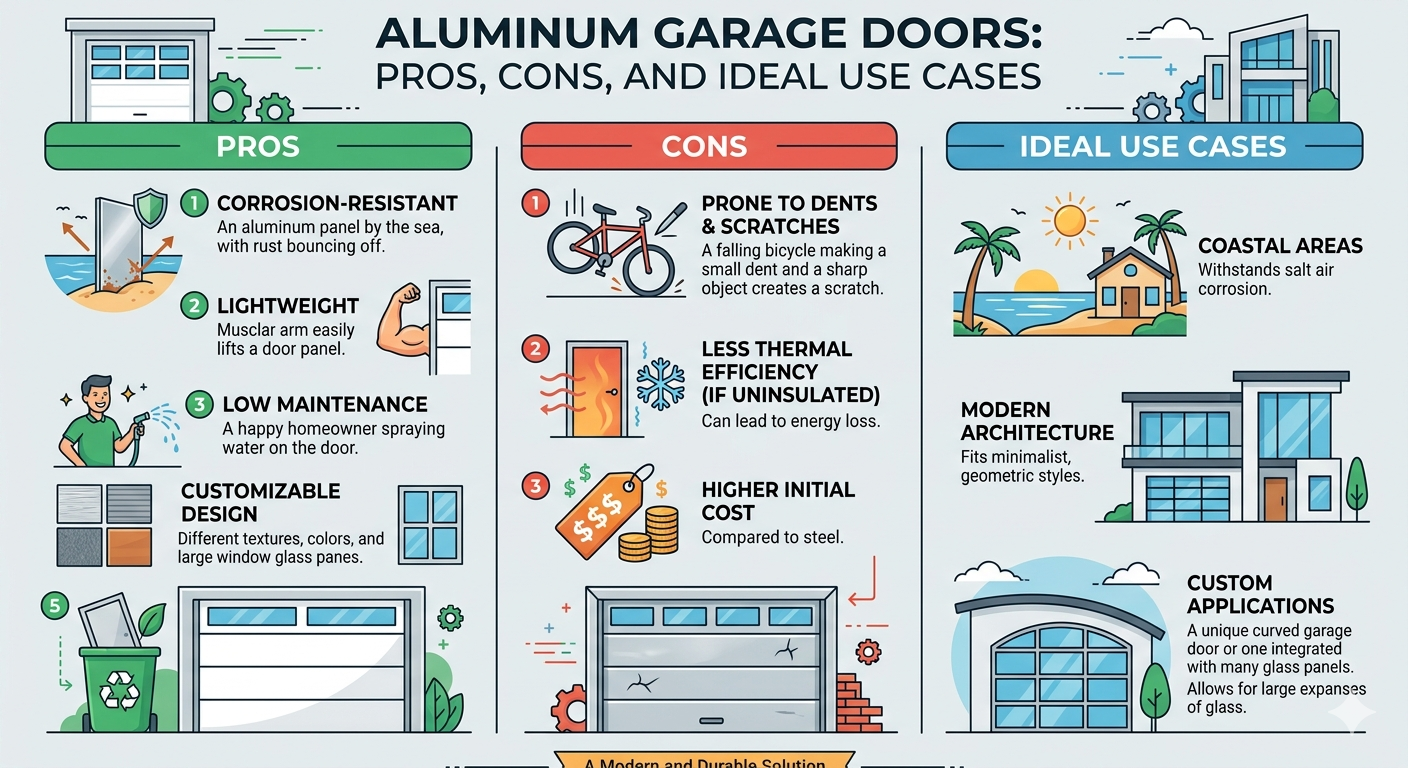
The Main Pros of Aluminum Garage Doors
The first major benefit is low weight. A heavy garage door can place more stress on the moving parts. Aluminum helps reduce that load. This does not mean the system can skip proper spring sizing or professional installation. It means the door material itself starts with less weight.
The second benefit is resistance to corrosion. In moist environments, a garage door faces more than daily use. It deals with rain, humidity, wet driveways, lawn sprinklers, and salt in the air near coastal areas. Aluminum handles these conditions better than many basic metal doors.
The third benefit is design flexibility. Aluminum doors can look clean, simple, and upscale. Homeowners can choose narrow frames, wide frames, glass sections, powder-coated finishes, and modern colors. The result can change the entire look of a home’s exterior.
The fourth benefit is easier upkeep. Aluminum does not need the same level of care as wood. It does not require regular staining. It does not peel in the same way painted wood can. A simple wash with mild soap and water can keep the surface looking fresh.
Aluminum garage doors may also support better daylight. Full-view or partial-view glass designs let natural light enter the garage. This can make the space feel more useful during the day. It also helps if the garage doubles as a workspace.
The Cons You Should Know Before Buying
Aluminum has limits. The biggest concern is denting. Aluminum is softer than steel. A basketball, bike handle, ladder, trash bin, or minor impact can leave a mark, especially on thinner panels. Higher-quality aluminum doors can reduce this risk, but they are not dent-proof.
Insulation can also vary. Some aluminum doors are built with insulated panels. Others focus more on style than thermal performance. If your garage connects to the home or sits below a bedroom, insulation should matter. Better insulation can help control heat, reduce noise, and improve comfort.
Glass options need careful thought too. Glass can look beautiful, but it can raise privacy concerns. Frosted, tinted, or obscure glass can help. You should also ask about glass strength, wind ratings, and safety features.
Cost is another factor. Basic aluminum doors may be affordable, but premium aluminum and glass doors can cost more than standard steel models. The final price depends on size, finish, glass type, insulation, hardware, and installation needs.
Repairs may also differ from steel doors. If a panel dents or the frame bends, replacement may be the better option in some cases. That is why it helps to choose a quality door from the start and work with experienced installers.
Ideal Use Cases for Aluminum Garage Doors
Aluminum garage doors work best when style, rust resistance, and lighter weight matter most. They are especially useful for homes with modern architecture. Clean lines, wide windows, and simple finishes pair well with aluminum frames.
They also work well for homeowners who want natural light inside the garage. A glass and aluminum design can turn a dark garage into a brighter space. This is helpful for people who use the garage for hobbies, workouts, tools, or storage organization.
Aluminum is also a smart option for detached garages, pool houses, workshops, and commercial-style home spaces. The door can create a polished look while staying practical.
For high-traffic family garages, choose a stronger model. Ask about thicker frames, reinforced panels, insulated options, and impact-resistant glass. If kids play near the driveway or equipment often leans against the door, durability should guide the final choice.
How to Make an Aluminum Garage Door Last Longer
A good door still needs care. Aluminum may resist rust, but the full garage door system includes springs, cables, rollers, hinges, tracks, seals, and an opener. These parts need routine attention.
Wash the door a few times a year. Keep tracks clean. Lubricate hinges, rollers with metal bearings, springs, and bearing plates with a garage door lubricant. Do not grease the tracks. Check the weather seal at the bottom. Replace it when it cracks or flattens.
Watch the door during movement. If it shakes, scrapes, closes unevenly, or sounds louder than usual, schedule service. Small problems can damage panels, strain the opener, or wear out springs faster.
Professional maintenance also matters. A technician can check balance, spring tension, cable wear, sensor alignment, opener force settings, and track condition. This keeps the door safer and helps protect your investment.
Is an Aluminum Garage Door Right for Your Home?
Aluminum garage doors are a strong choice for homeowners who want a lighter, cleaner, and more modern garage door. They resist corrosion, offer attractive design options, and can bring natural light into the garage. They do have tradeoffs. They may dent more easily than steel, and premium models can cost more. The right choice depends on how you use the garage, how much durability you need, and what style fits your home.
Before replacing your door, compare aluminum with steel, wood, fiberglass, and insulated options. Think about weather, privacy, energy performance, maintenance, and long-term repair needs. A garage door is not just a design detail. It is a moving system that protects your home every day.
For expert help with aluminum doors, spring issues, repairs, and replacement planning, contact Palma Group Pro. The team can help with garage door replacement torsion springs in Parkland FL, garage door spring repair services in Boca Raton, garage door repair spring replacement, garage door emergency repair, and garage door repair Naples FL. Contact Palma Group Pro today to choose, repair, or maintain a garage door system that fits your home and daily needs.
By: M N Farooq

