Paying off high-interest debt is one of the fastest ways to get debt-free. It stops interest from compounding, protects the credit profile and helps save towards other major goals. Individuals with high-interest debt usually have a bad credit history. It prevents one from proceeding with important life goals. One may struggle to get cheap loans, credit cards and even good employment.
Moreover, balances grow quickly if one does not pay on time. Late payment, missed payment and other penalties make debt difficult to pay and manage. In this case, people borrow more to repay the existing debt. Therefore, one ends up in a debt cycle. It affects the efforts to ensure financial stability.
It is important to determine how clearing high-interest debt early may help. Read ahead to know more.
Which is the quickest way to clear high-interest debt?
Generally, debt consolidation is the quickest way to clear high-interest debt in Ireland. It helps you merge different payments into one single payment. You may consolidate a loan in Ireland if you struggle to repay it due to high monthly instalments. For example, you can consolidate short-term loans that you took earlier for emergencies.
Alternatively, you can also consolidate the pending rent payments. It boosts your credit history, improves financial stability and helps you concentrate better on other important financial and life goals. However, make sure that the consolidation loan helps you save money on interest and total loan payments. If it doesn’t, then the loan may not be the right solution to your debt problem.
How does clearing high-interest debt improve financial stability?
Here are some reasons why clearing costly high-interest debts improves financial stability:
1) Pay less interest overall
Clearing the costly debts before the actual deadline helps you save money on interest costs. This is because it shortens the loan repayment timeline.
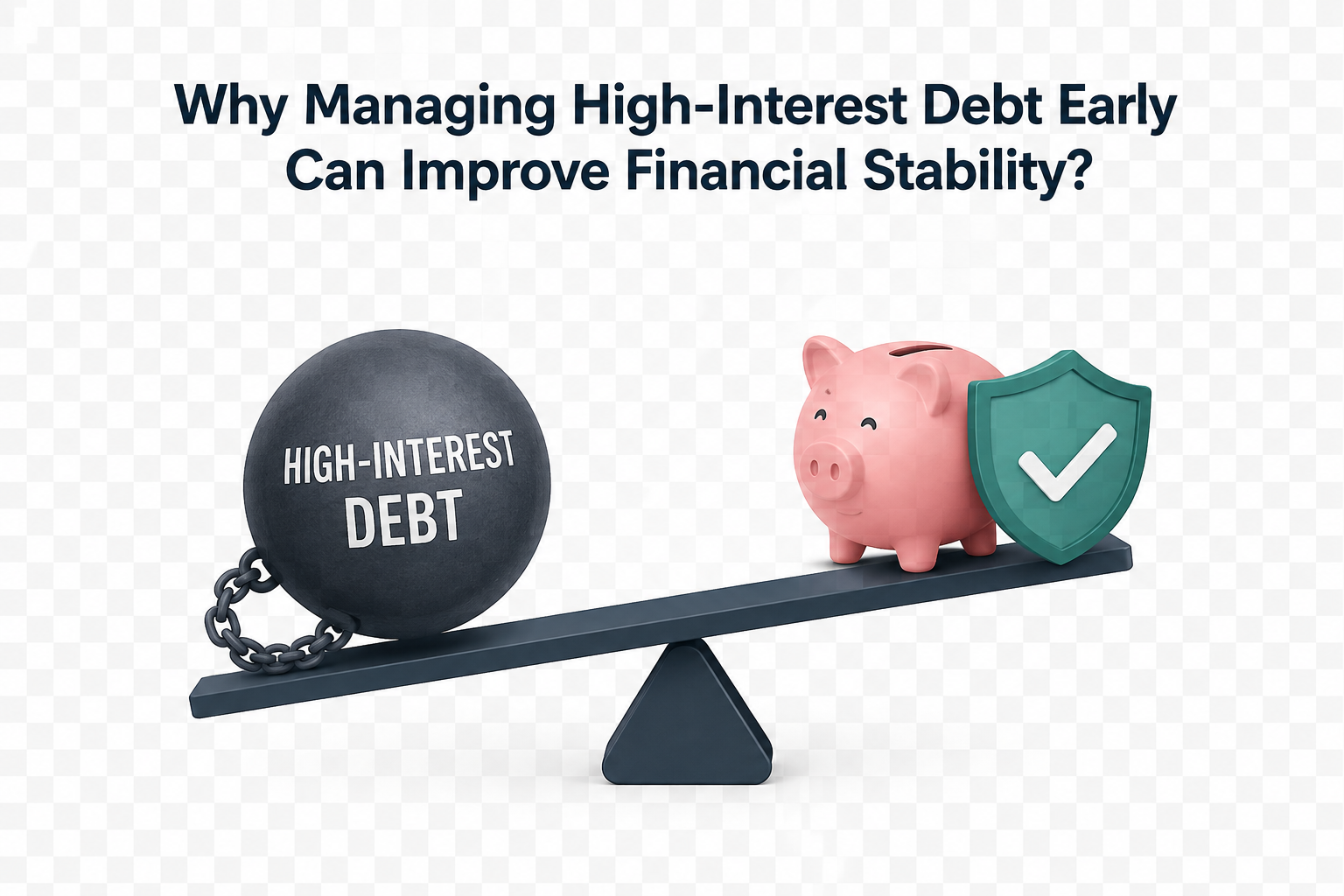
Most financial and debt management experts recommend paying the high-interest debts first. It mathematically minimises total debt costs compared to clearing dues the other way. It improves financial stability as lower interest costs mean more savings.
2) Improves credit history
Paying off expensive debts first improves your credit history positively. It showcases you as a responsible person in the eyes of finance providers. It means you may qualify for affordable interest rates and flexible terms on other loans and credits you take in the future.
Alternatively, missed, non-repayments or late payments affect your credit history. It raises future borrowing costs, and you may struggle to get a loan.
Check whether you can repay more than the minimum. Identify the additional costs that some lenders may impose on early payments. Enquiring is better to save yourself from high penalties and retain a stable credit history.
3) Reduces financial stress and improves decision-making
Paying off a high-interest balance early prevents unnecessary stress. You don’t need to lose your peaceful sleep due to mounting debt. Understanding the most expensive debts and creating a debt payment strategy helps improve your finances. It cuts the hassle of worrying about late payment or missed instalment penalties.
It instead gives you a clear headspace to create a well-working budget, spending strategy and help save money on unnecessary expenses.
4) Helps you develop an emergency fund
An emergency fund is one of the most important aspects that you must plan as an individual. It helps you counter serious emergencies without worries. Some things may occur unplanned. You may not be cash-ready for that. However, having an emergency fund reduces the worries. You can tap it and meet the requirements.
You can begin by understanding the best interest rates that you may get on a savings account. Set this account separately from the usual current one. Use it only for saving towards an unplanned cause. You may get a better ROI on the account as interest increases the total amount to leverage.
You can set direct debits to pay a fixed amount of your income towards an emergency fund. The consistency may reward you with a good lump sum to consider when you need funds urgently. It also reduces the reliance on short-term or same-day loans. Therefore, you accrue less debt, and this strengthens your financial position. Generally, it is ideal to have 3-6 months of emergency fund savings.
5) Improves future goal planning
Clearing high‑cost debt early effectively gives you a guaranteed “return” which equals the interest rate you avoid. It is often higher than conservative investment yields. Therefore, it gives you immense scope to determine important life goals. Accordingly, you may concentrate on achieving each goal.
What are some best strategies to manage high-interest debt?
Here are some strategies that you may follow to manage high-interest debt:
Step 1- list all debts and label them
Identify and list the highest-interest debts. You may include debts like credit cards, mortgage, student loans, home renovation loans, overdrafts, etc. It may also include rent and other housing bills that are pending.
Now, label these debts as primary and secondary. Include the most important or life-threatening debts, like rent, in the primary aspect. Alternatively, secondary debts may include overdrafts, etc.
Step 2: Choose the right repayment method
You can repay the dues in two popular ways:
- Debt avalanche: It means paying extra towards the high-interest debts and minimum on other debts
- Debt snowball: It means putting extra towards the smallest balance first. Start by paying off the smallest debt first. Roll that payment to pay the next smallest debt and so on.
Step 3: Check consolidation possibilities
You can consider debt consolidation loan options like personal loans, short-term loans, secured homeowner loans or balance transfer credit cards. It lowers your monthly repayment liabilities and overall interest rates. However, extending a short-term loan to a longer one can increase the total interest liabilities. It is even if the APR is lower.
Step 4: Automate debt payments
Automating debt payments helps you avoid penalties and missed or late payment costs. Otherwise, you risk deepening the debt spiral. Compare options like personal loans, overdrafts and other finance options.
Step 5: Use windfalls wisely
Tax refunds, bonuses, or lump sums can make a big dent in high‑interest balances if applied directly to principal. Consider windfalls as “extra debt payments” rather than spending money to improve stability.
Bottom line
Thus, managing high-interest debt can improve financial stability by leaving more room for other goals. It prevents you from an unending cycle of missed payments and high interest costs. Moreover, it helps you concentrate better on other primary goals like saving for your child’s education. Check the possibilities to pay early and save on interest payments.