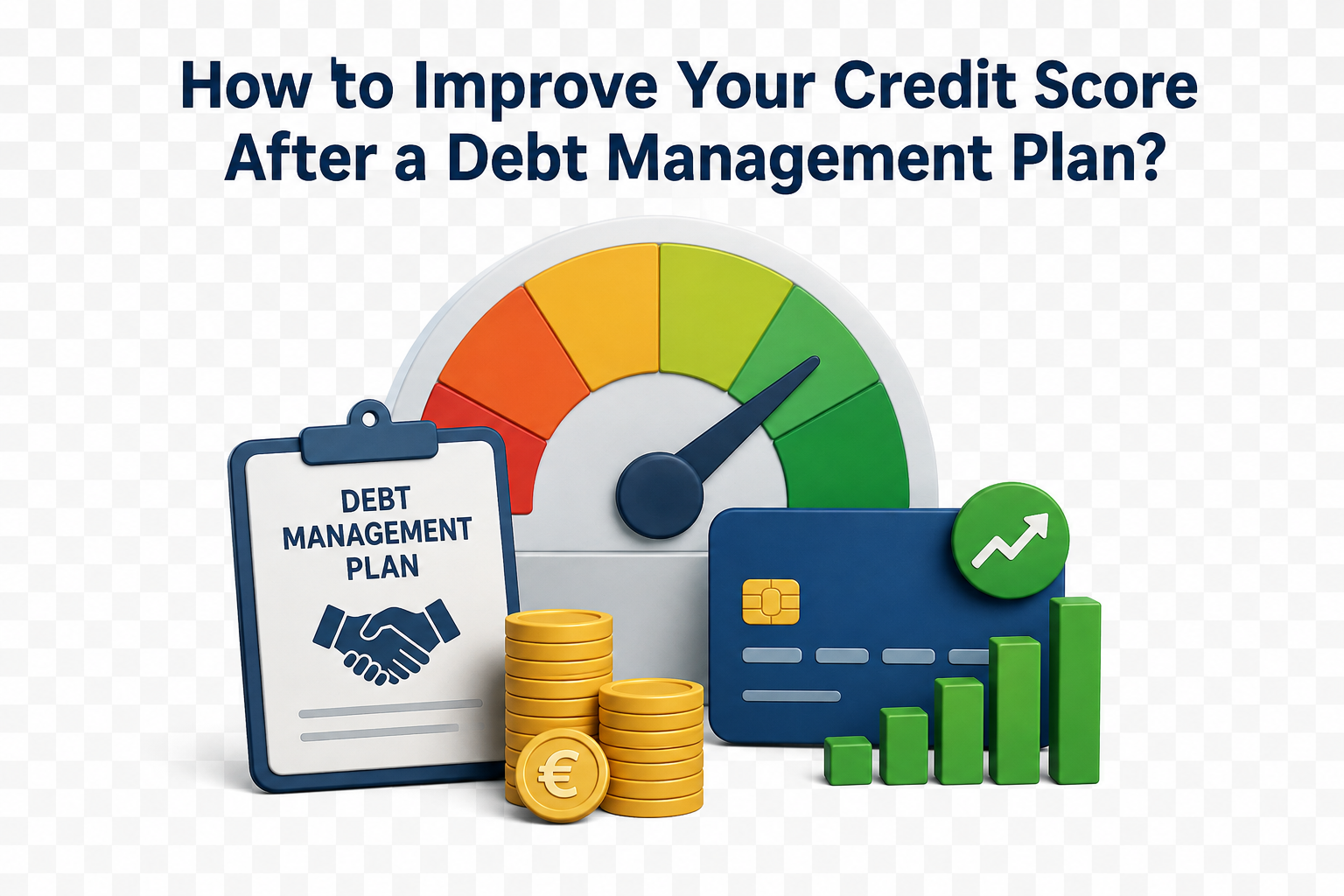
Coming out of a debt management plan is indeed an achievement. It frees you from the constant debt cycle. However, ending a debt management plan is just the beginning. This is because, in the process, your credit score suffers a lot.
Missed payments, loan defaults, and information related to debt stay on the credit file for a long time. Now is the high time to build one from scratch. It requires patience, the right budgeting approach and consistency.
Yes, you can rebuild your credit score, as it is never too late. Checking your credit files, correcting inaccurate information, paying every bill consistently, and avoiding unaffordable borrowing are among the most important steps. The blog discusses the aspects which may help you in this situation.
What happens to your credit score after a debt management plan?
A debt management plan is an informal arrangement in which you make one regular payment that is distributed among your creditors. The DMP provider may negotiate the debt with your creditors. It may reduce the overall burden and make it affordable. The arrangement may affect how they report the accounts to credit reference agencies.
You may spot the following situations under an active DMP:
- Missed or reduced payments get recorded on your profile
- Creditors register the defaults
- A DMP indicator or marker on some accounts
- You may face difficulty in getting loans, mortgages, or credit cards
- You may face high interest rates and strict terms even if the lender agrees to provide a loan
Note: Completing the DMP does not automatically erase historical information. StepChange explains that information such as missed payments or court action is generally removed after 6 years, while a default normally remains for six years from the date.
This means the date the account was first recorded as being in default is important. A creditor should not usually reset the six years simply because you continued making payments under a DMP.
What if I need a loan immediately on a debt management plan?
If you need a loan urgently, speak to your DMP provider. Here is what you need to ask before seeking a loan:
a) For an emergency
If you need an urgent loan for bad credit from a direct lender, ask your DMP provider whether you can adjust the budget. Check whether they can provide more time to clear the payments. If not, you may seek hardship support and other government alternatives.
b) If borrowing is unavoidable
You can use an eligibility checker where available. Borrow the smallest amount possible and check the total repayment—not just the monthly payment.
c) For essentials
Check whether you may get help from your local council, benefits, a credit union or salary advance. Avoid payday loans or “guaranteed loans” from lenders asking for upfront fees.
5 Steps to improve your credit score after a Debt Management Plan
Here are some steps that you can follow to improve your credit score after a Debt Management Plan:
Step 1: Check your credit report
Start by obtaining your reports from the three main UK credit reference agencies, namely Experian, Equifax and TransUnion. Checking one report may be useful, but it may not show every account or the same information as the other two. Thus, make sure to check every credit report.
Analyse the following aspects:
- Name, D.O.B, and current address
- Previous addresses
- Accounts included in the DMs
- Default Dates
- Account balances
- Payment status
- Duplicate accounts
- Credit applications you don’t recognise
- CCJs
Make sure everything is in place, and you know about these details.
Step 2: Register for the Electoral Roll
If you are eligible to vote as a permanent citizen of the country, register for the Electoral Roll. It helps lenders verify your identity and generates a reliable overview. According to MoneyHelper, registering for the electoral roll at your current address improves your credit score. It may take 8 weeks to update the status.
Differences between the address on your application and the information that credit reference agencies hold can create identity-verification problems. It is even when you have managed your money responsibly.
Alternatively, if you are not eligible to register, you can still ensure a stable residential address and keep details updated. You may get a loan on your Visa.
Step 3: Pay every bill on time
Setting up direct debits may help you remain consistent with bill payments. It is important to be regular with payments as it helps build positive credit history. Keep enough money in your bank account to cover scheduled payments and the direct debits to work. Review the debt payment dates after receiving the salary or benefits. You can automate the payments for:
- Rent
- Utility payments
- Insurance
- Tax
- Loans and credit cards
- Mortgage
- Council tax
Step 4: Manage current credit responsibly
You may be tempted to take out another loan after clearing the DMP. However, don’t take it unnecessarily. Check how much money you need given your savings. Accordingly, borrow only the required sum.
- If you already hold a credit card, here is what you need to know:
- Keep the balance below the credit limit
- Avoid relying excessively on overdrafts
- Pay at least the required amount by the due date
- Clear the balance in full every month
- Do not borrow money unnecessarily simply to improve the credit score
- Close unused accounts only after considering how this may affect your available credit and financial flexibility.
Step 5: Avoid multiple applications
Submitting multiple full credit applications in a short period can affect your credit score. Lenders may determine a cluster of applications as a sign of extreme financial pressure.
Instead, you can try these:
- Check your eligibility for free before applying.
- Use soft-search tools when available to know approximations.
- Compare the total cost of borrowing, apart from interest and monthly payment.
- Avoid applying for multiple products at once.
- Delay non-essential applications while stabilising your budget.
- Do not apply for credit you pass the “pre-approval”; read the terms and affordability requirements.
Bottom line
These are some of the best ways to improve your credit score after a debt management plan. Determine the right strategy given your sensitive finances and well-being. Analyse which aspects may help you improve your credit score quickly. Debt consolidation and updating the electoral roll are some of the interesting ways to do so.