
You spend months collecting data, running experiments, and drafting chapters. You hit submit. Weeks later, the email arrives. Desk rejection. The reason rarely involves flawed science. Journals reject papers for formatting errors, missing ethical statements, poor scope alignment, and unreadable structure. You deserve better than that. Preparation separates published authors from frustrated researchers. You will learn exactly how to ready your work for editorial review. We will cover thesis article extraction, professional review support, and a reliable Pre-Submission Checklist. You will also discover how journal editors actually evaluate manuscripts during the first seventy two hours.
Understand What Journals Actually Look For
Editors scan manuscripts before sending them to reviewers. They check alignment with the journal scope. They verify reference formatting. They look for clear research questions and measurable outcomes. Nature Publishing Group publishes editorial guidelines that emphasize novelty, reproducibility, and transparent methodology. You must present your work in a way that matches these standards. Journals receive hundreds of submissions weekly. Your paper competes against well polished research. Clear writing wins. Structured arguments win. Transparent data wins. You do not need to overcomplicate your narrative. You simply need to follow established academic conventions. Readers expect logical flow. Reviewers expect methodological clarity. Editors expect compliance with author instructions. Meet those expectations and your manuscript moves forward.
Extract Your Thesis into a Focused Article
Many researchers make one critical mistake. They submit their entire thesis as a journal paper. Journals expect concise research articles, not comprehensive dissertations. Thesis article extraction requires strategic pruning. You must isolate the strongest contribution. Remove literature review chapters that span fifty pages. Replace broad theoretical discussions with targeted hypotheses. Condense methodology into reproducible steps. Focus on results that directly answer your research question. Academic publishers consistently advise authors to transform thesis chapters into standalone manuscripts. You will achieve higher citation rates when you publish focused papers. Split a broad dissertation into two or three targeted articles. Each manuscript should present a single clear narrative. Readers appreciate direct insights. Reviewers appreciate manageable word counts. You save time and increase acceptance probability.
Run Your Work Through Manuscript Peer Review Services
Blind spots exist in every draft. You read your own work so often that missing commas and logical gaps become invisible. Manuscript peer review services solve this problem. Independent experts evaluate your structure, language, statistical reporting, and argument flow. They simulate the actual journal review process. You receive actionable feedback before editors see your file. Reputable services employ active researchers from your discipline. They check citation accuracy, figure clarity, and methodological soundness. The Council of Science Editors emphasizes that pre submission review reduces desk rejections by nearly thirty percent. You gain confidence when professionals validate your work. You fix weaknesses while you still control the revision timeline. Think of this step as a dress rehearsal. You catch mistakes early. You strengthen your narrative. You submit with certainty.
Build a Reliable Pre-Submission Checklist
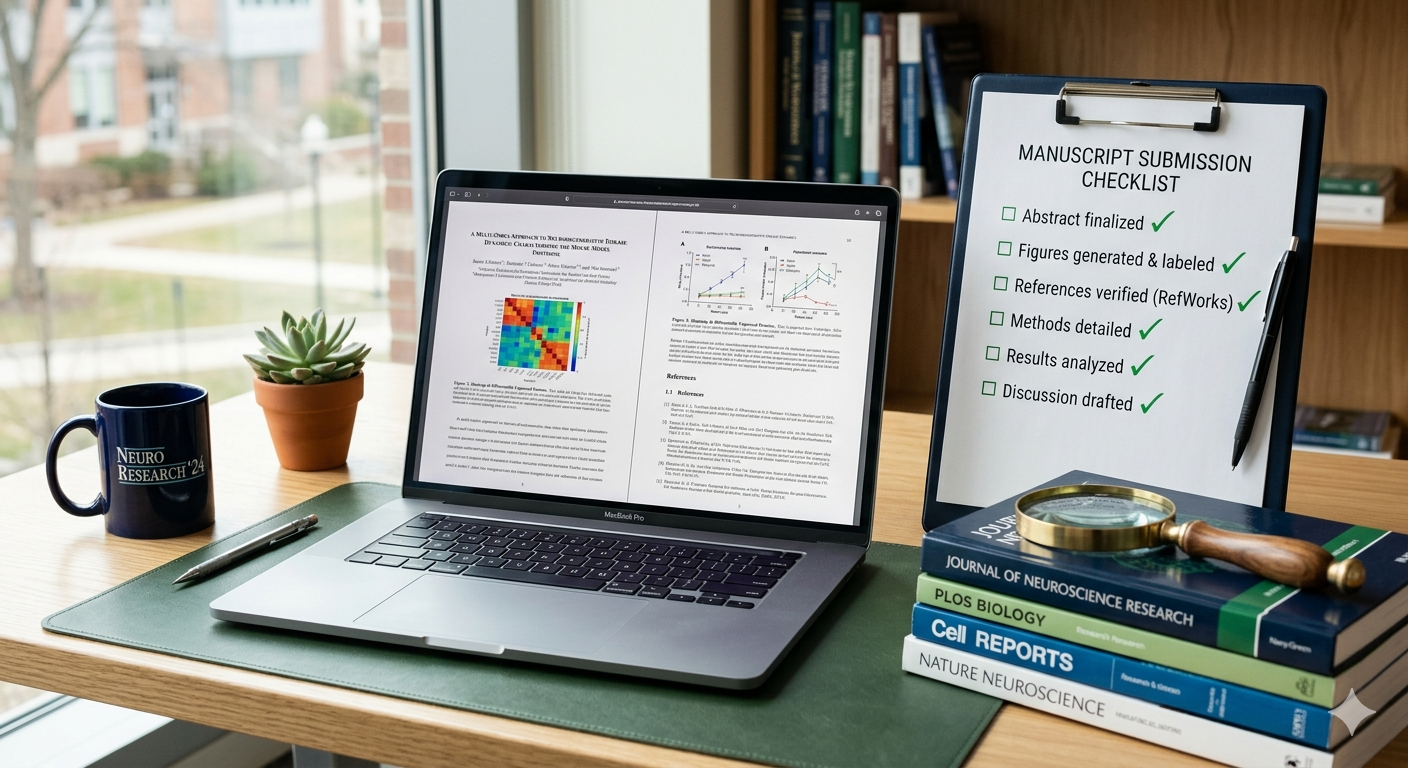
A Pre-Submission Checklist prevents careless oversights. You must verify every element before uploading your file. Start with author guidelines. Journals specify word limits, reference styles, figure resolutions, and supplementary material requirements. Check each requirement individually. Next, verify reference accuracy. Cross verify every citation with the original source. Remove broken links. Update outdated DOIs. Confirm that all co authors approved the final draft. Add contribution statements and funding acknowledgments. Many journals now require data availability statements. Prepare these in advance. Confirm that all figures meet print resolution standards. Run your manuscript through plagiarism detection software. Self plagiarism counts as a violation. Ensure your cover letter addresses the editor directly. Explain why your research fits their journal. A structured checklist eliminates guesswork. You transform anxiety into routine.
If you need structured guidance on formatting complex datasets, you can explore this comprehensive resource on academic data presentation. Many journals now mandate structured reporting frameworks. You should adopt them early. Readers trust transparent methodology. Reviewers reward clear visualizations. You reduce revision cycles when you follow established data standards.
Match Your Paper to the Right Journal
Scope mismatch causes immediate rejections. You might write an excellent paper, but the wrong journal will reject it within forty eight hours. Research the target publication thoroughly. Read recent issues. Analyze their most cited articles. Identify recurring themes and preferred methodologies. Check their acceptance rate and review timeline. Use Scopus and DOAJ to verify indexing status. Predatory journals mimic legitimate titles. They promise rapid publication and charge excessive fees. Legitimate journals operate transparently. They list editorial boards, peer review policies, and publication ethics. You should prioritize journals that align with your discipline and audience. A precise match increases acceptance probability. Editors recognize relevant submissions instantly. You build long term academic visibility when you publish in respected venues.
Verify Ethics and Data Integrity
Academic integrity forms the foundation of credible research. Journals require explicit ethical compliance. You must include Institutional Review Board approval for human or animal studies. Declare conflicts of interest. Disclose funding sources. State data collection limitations honestly. Plagiarism software scans every submission. Turnitin and iThenticate compare manuscripts against billions of sources. Even accidental similarity triggers editorial scrutiny. You must cite properly. You must paraphrase accurately. You must credit original authors. The Committee on Publication Ethics maintains strict guidelines on authorship disputes and image manipulation. You should store raw data in recognized repositories. You should share analysis code when possible. Transparency builds trust. Reviewers verify reproducibility. Readers cite reliable work. You protect your academic reputation through rigorous compliance.
Before you close your draft, you should review this authoritative guide on scholarly communication standards. The academic community rewards researchers who follow transparent reporting practices. You strengthen your manuscript when you align with global publishing norms. Editors notice compliance instantly. Reviewers spend less time clarifying basic requirements. You accelerate the review process.
Final Read Through and Submission
The last step demands patience. You must read your manuscript aloud. You will catch awkward phrasing immediately. Verify table numbering. Confirm figure legends match visual content. Check equation formatting. Ensure all abbreviations appear with full definitions. Submit through the official portal. Track your submission confirmation email. Keep copies of all uploaded files. Editors appreciate organized authors. You demonstrate professionalism through attention to detail. You reduce administrative delays. You position your work for fair evaluation. Publication takes time. You control the preparation phase. You set the standard for your academic career.
Conclusion
Journal submission demands strategy, not luck. You extract focused narratives from broader research. You validate your work through independent review. You follow structured checklists. You match journals to your scope. You prioritize ethics and transparency. You read carefully before uploading. Each step reduces rejection risk. You build credibility with every submission. The academic publishing landscape evolves constantly. Journals demand higher transparency and clearer methodology. You adapt by preparing thoroughly. You submit with confidence. You advance your research career. Start today. Prepare your manuscript properly. Watch your acceptance rate climb.

