
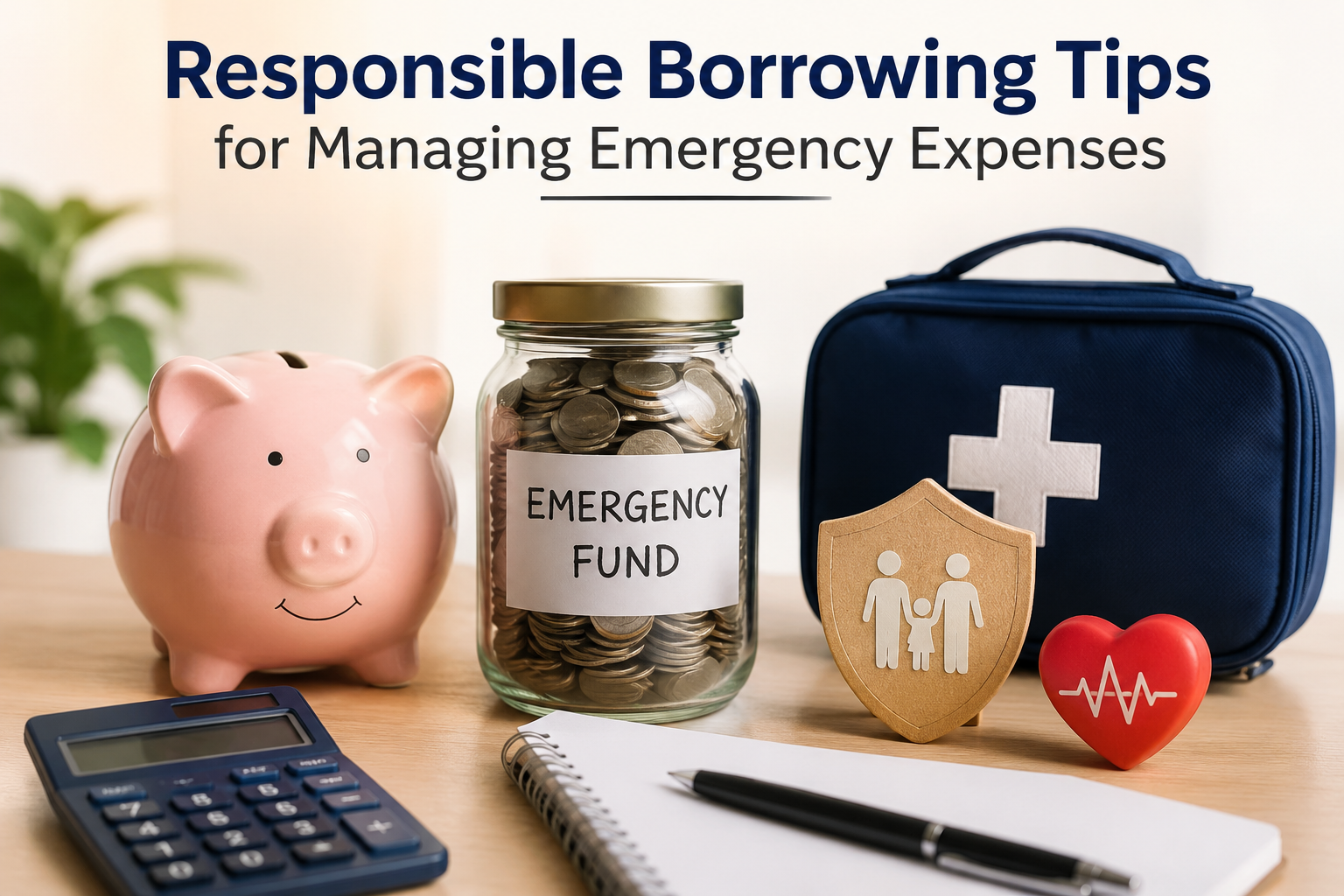
Unexpected expenses can catch you off guard at any time. As long as you have a considerable amount of savings to dip into, it is not a concern, but what if your savings have run out? Various lenders are out there providing emergency loans in Ireland. Though these loans are convenient, you need to be cautious while applying for them. Small emergency loans charge high interest rates and are discharged in one fell swoop.
Experts suggest borrowing money only when it is urgent, and you are completely certain about your repayment capacity. Sometimes, loans become difficult to tackle. In case you fall behind on payments, accrued interest and late payment charges will quickly accumulate on the debt. Eventually, you will find yourself stuck in an ongoing cycle of debt.
Responsible borrowing tips
In order to ensure that you do not get caught up in an ongoing cycle of debt after borrowing money, use the following responsible tips:
Check how much savings you have
Experts do not allow of borrowing when you have savings to fall back on. An emergency cushion is meant to deal with all these expenses. Whether you have come up with an unexpectedly high utility bills or a veterinarian expenses, savings are the most ideal method to cover them. They will not cost you anything.
If you find that savings are insufficient, make sure that the loan you take out only bridges the gap. For instance, if you need €1,500 and your savings have only €1,000, you should try to borrow only the difference.
Determine affordability
Now you know how much money you need. The next step is to determine affordability. Use an online loan calculator to know how much it will cost you. Bear in mind that they do not include fees and associated charges, and therefore they cannot determine the actual cost.
Check whether your budget has wiggle room to pay for the estimated cost determined by the calculator. In order to do so, you should add in all your expenses and deduct them from your income. The remaining balance should be enough to pay off your debt. Make sure that you have a buffer, as the actual cost will be more than the estimated one.
Compare interest rates
Interest rates are charged by lenders. They will charge high interest rates if they perceive you as a very risky borrower. Your credit score also plays a vital role in it. Compare interest rates between lenders. Try to choose a less expensive deal.
Personal loans in Ireland generally charge high interest rates as lenders have no way to recover their money back in case you make a default. Use comparison websites; however, they only demonstrate interest rates, not the APR. Try to obtain prequalifying letters from lenders so you can easily compare deals, but remember that actual interest rates will be higher than prequalifying rates as they are offered after running a hard credit check.
You can contact a broker if you do not want to get into the hassle of comparing loan deals. Brokers will be able to inform you of the APRs that lenders charge. Further, they will introduce you to only those lenders whose acceptance criteria you meet, thereby reducing the risk of rejection on grounds of ineligibility.
Explore borrowing options
One of the biggest mistakes that borrowers make is that they do not realise that all borrowing options are not the same. When you come across some emergencies, you can use either overdrafts or credit cards to meet small unexpected expenses, but overdrafts are way more expensive than credit cards as they charge interest by the day.
Before you jump to any loan offer, you should carefully understand which loan serves your needs. There are various borrowing options you can consider, such as:
- Personal loans: they are ideal when you need a large amount of money, for instance, you want to do up your house.
- Credit cards: they come in handy when you need a paltry sum to fund the gap in your savings. Pay off the balance in full to avoid accrued interest.
- A line of credit: a line of credit ensures flexible borrowing. You can borrow money as and when you need. Pay back money as per your convenience. Interest is charged only on the unpaid balance.
- Borrowing from friends and family: they are free of interest. They can offer you a flexible repayment schedule.
- Overdrafts: it should be a last resort because it is the most expensive option. Use it only when you pay back money as soon as possible.
If you choose a broker, they can help you decide which one is the most suitable option based on your financial condition.
Protect yourself from predatory lenders
Do not forget that there are predator lenders. They are also called loan sharks, as they use unethical lending practices without being authorised. They aim at credulous borrowers with compromised credit histories. They tend to lure them by making outlandish claims such as instant approval and no credit checks.
They charge exorbitant interest rates to trap them into an ongoing cycle of debt to make money. Bear in mind that even if you borrow money from an unregistered lender, you cannot abdicate responsibility for clearing the dues. Non-payment or default will lead to credit score damage.
It is essential that you carefully check the registration details of a lender. You can find these details in the Central Bank of Ireland Registers. If you apply for a loan through the agency of a broker, you do not have to worry about the registration of lenders. Brokers always associate with authorised lenders.
The bottom line
Emergencies are part of life, but your finances do not have to be in chaos when they crop up. By assessing your needs, choosing the right option, understanding costs, and planning repayment, you can help you navigate emergencies without sinking into debt. Take help from a broker if you cannot choose the right deal for you.

