
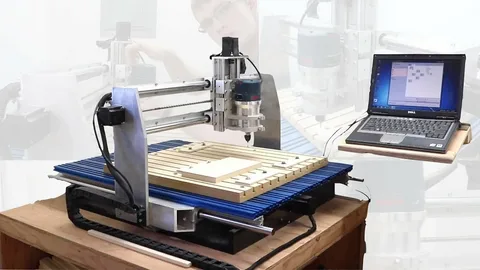
Choosing the best cnc milling machine for small business operations is one of the most important investment decisions for modern manufacturing startups, workshops, and engineering services. The right machine can significantly improve production speed, accuracy, and profitability, while the wrong choice can lead to downtime, wasted budget, and limited growth potential.
Below is a complete guide to help you make a smart, future-proof decision when selecting a CNC milling machine for your business.
Understanding Business Needs and Applications
Key points to consider:
- Type of products you will manufacture
- Level of precision required
- Expected production volume
- Materials you will frequently use
- Space available in your workshop
Before selecting the best cnc milling machine for small business, it is essential to clearly define your production goals. A machine designed for light prototyping may not be suitable for high-volume metal machining, while an industrial-grade machine might be unnecessary for simple custom parts.
Different industries such as automotive, jewelry, aerospace prototyping, and furniture manufacturing require different levels of CNC capability. Understanding your core application ensures you do not overspend or underinvest in essential features.
Additionally, evaluating your business model helps determine whether you need a 3-axis, 4-axis, or 5-axis machine. Each upgrade in axis capability increases flexibility but also affects cost and complexity.
Key Specifications and Performance Factors
Key points to consider:
- Spindle speed (RPM) and power
- Axis configuration (3-axis, 4-axis, 5-axis)
- Control system type (Haas, Siemens, Fanuc, etc.)
- Cutting accuracy and tolerance level
- Feed rate and machining speed
Performance specifications define how well a CNC machine will perform in real-world production. The best cnc milling machine for small business should balance speed and precision without overwhelming your operational needs.
Higher spindle speed and torque allow smoother cutting of harder materials like aluminum and steel. However, for softer materials like wood or plastic, moderate specifications may be more cost-effective and energy-efficient.
It is also important to evaluate the control system. User-friendly interfaces reduce training time for operators and help small teams achieve higher productivity faster.
Machine Size, Workspace, and Material Compatibility
Key points to consider:
- Worktable size and travel distance
- Machine footprint and workshop space
- Compatibility with aluminum, steel, wood, or plastics
- Chip removal and cooling system
- Structural rigidity and frame design
Space planning plays a major role in selecting the best cnc milling machine for small business. A machine that is too large can waste valuable workshop space, while a small machine may limit production capability.
Material compatibility is equally important. If your business focuses on aluminum parts, you need a machine with proper spindle power and cooling systems to prevent overheating and tool wear. For mixed-material workshops, versatility becomes a key advantage.
Structural rigidity also affects long-term accuracy. A heavy-duty frame reduces vibration, improving precision during high-speed operations and ensuring consistent output quality.
Budget, ROI, and Long-Term Operating Costs
Key points to consider:
- Initial purchase cost
- Maintenance and repair expenses
- Tooling and consumables cost
- Energy consumption efficiency
- Expected return on investment (ROI)
Budget planning is critical when choosing the best cnc milling machine for small business. While low-cost machines may seem attractive initially, they often come with higher maintenance costs and shorter lifespans.
A smarter approach is to calculate total cost of ownership rather than just purchase price. This includes tooling, electricity usage, software updates, and spare parts availability.
A high-quality machine may cost more upfront but often delivers faster ROI due to improved efficiency, fewer breakdowns, and higher production output.
Support, Software, and Brand Reliability
Key points to consider:
- Availability of technical support and service centers
- Compatibility with CAD/CAM software
- Training and documentation provided
- Brand reputation and industry reviews
- Availability of spare parts
Even the best cnc milling machine for small business can become a liability without proper support and software integration. Reliable technical assistance ensures minimal downtime during unexpected issues.
Software compatibility is another crucial factor. Machines that integrate well with popular CAD/CAM platforms allow smoother design-to-production workflows, reducing errors and improving productivity.
Brand reliability also matters. Established manufacturers often provide better warranties, spare parts availability, and long-term service support, which is essential for growing businesses.
Conclusion
Selecting the best cnc milling machine for small business requires a careful balance between performance, cost, space, and long-term scalability. By understanding your production needs, evaluating technical specifications, considering workspace limitations, planning your budget wisely, and ensuring strong after-sales support, you can make a confident and profitable investment.
A well-chosen CNC milling machine is not just equipment—it is a long-term business asset that drives efficiency, quality, and growth. Making the right decision today can set the foundation for your small business success for years to come.

