
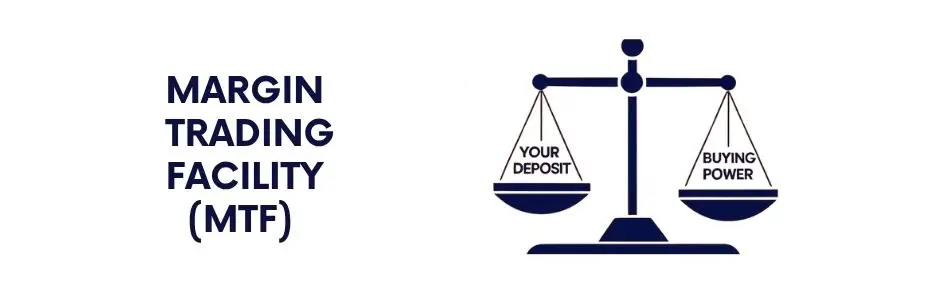
Let us start with an uncomfortable truth: the MTF interest rate your broker advertises is almost never the rate you actually pay. Behind the headline number lies a complex web of ancillary charges, processing fees, and structural costs that collectively inflate your effective cost of MTF by 2-5% annually — without a single rupee appearing in an obvious line item.
This is not illegal. Most of these charges are disclosed somewhere in the fine print of your account agreement or the broker’s tariff schedule. But they rarely surfaced prominently, and the average retail trader using a leverage trading app has little idea that their actual cost of capital is significantly higher than the rate they signed up for.
In this article, we expose every hidden MTF charge category, teach you how to calculate your true effective rate, and show you how choosing a transparent broker with genuinely low MTF interest rates can save you tens of thousands of rupees over your trading career.
Hidden Charge #1: Pledge Creation and Unpledge Fees
When you pledge shares as collateral for MTF, this triggers a formal transaction with CDSL or NSDL — India’s two central depositories. Brokers typically pass on (and sometimes mark up) this charge, which can range from Rs. 25 to Rs. 150 per pledge transaction depending on the platform.
At first glance, Rs. 50 per pledge seems trivial. But consider: an active MTF trader might pledge shares 2-3 times per month, and unpledge an equal number of times. That is 4-6 demat transactions monthly = Rs. 200-900 per month in pure pledge mechanics. Annualized: Rs. 2,400-10,800.
On a Rs. 3 lakh MTF portfolio, Rs. 6,000 in annual pledge charges alone represents a 2% additional cost — without a single paisa in trading profit. This is why platforms that charge minimal pledge fees are not just a convenience; they are a financial necessity for active leveraged traders.
The Pledge Fee Test: Before activating MTF with any broker, ask: ‘What is your CDSL/NSDL pledge creation charge per transaction?’ If they hesitate or give a vague answer — that is your answer.
Hidden Charge #2: The Margin Trading ‘Processing Fee’
Some brokers charge an upfront or annual ‘MTF activation fee’ or ‘processing charge’ to enable the margin trading facility on your account. This can range from Rs. 250 to Rs. 2,000 and may be annual or one-time.
Others embed this charge within their first month’s interest billing — meaning new MTF users effectively pay a higher effective rate in the first month without realizing it. Always ask explicitly whether there is any activation, processing, or annual fee for MTF — separately from the interest rate.
Hidden Charge #3: The ‘Demat Transaction Charge’ on MTF-Purchased Shares
When you purchase shares under MTF and they are credited to your demat account, this triggers a demat transaction charge — typically Rs. 10-25 per ISIN (International Securities Identification Number) per transaction. Again, trivial for a single trade. For a trader managing 8-10 MTF positions across a month, this can add Rs. 80-250 per month.
This charge exists for regular delivery trades too, but many traders do not realize it also applies to MTF purchases — doubling the demat friction they are paying on leveraged positions.
Hidden Charge #4: Interest Rate Rounding and Calculation Method
This is the subtlest but most financially significant hidden cost. Two brokers can both advertise ‘12% per annum’ MTF rate, but calculate interest differently:
- Method A (Actual/365): Interest = Principal x Rate x Days/365 — the most favorable for traders
- Method B (Actual/360): Interest = Principal x Rate x Days/360 — results in ~1.4% higher effective annual cost
- Method C (30-Day Month Basis): Charges a full 30-day month even for 22-day holds — overcharges traders by up to 36% on shorter positions
Always ask your broker: ‘How exactly do you calculate daily MTF interest?’ The answer reveals whether the stated rate is actually the effective rate. Platforms with genuinely transparent structures — like the MTF platform at Pocketful — use actual day counting, ensuring what you see is what you pay.
Hidden Charge #5: Margin Shortfall Penalties
If your MTF position’s value falls and your margin drops below the maintenance minimum, many brokers charge a margin shortfall penalty — before or in addition to initiating a margin call. This charge can be Rs. 500-2,000 per instance, or a percentage of the shortfall amount.
This charge is almost never mentioned in the front-page rate card. It only appears in the fine print under ‘consequences of margin shortfall.’ For active traders in volatile markets, this can be a recurring and significant unexpected cost.
Hidden Charge #6: GST on Interest
MTF interest, like all financial service charges in India, attracts 18% GST. This is applied on top of the stated interest amount. So if your broker charges 12% annual MTF interest, the effective rate after GST is 12% + (12% x 18% GST) = 14.16%.
Many brokers display pre-GST rates in their marketing materials. When comparing rates, always ask: ‘Is this rate inclusive or exclusive of GST?’ A 12% post-GST rate is materially cheaper than a 12% pre-GST rate, which effectively becomes 14.16%. On Rs. 2 lakh funded for 6 months, the difference is Rs. 2,160 — not trivial.
GST Reality Check: Always ask for the GST-inclusive effective annual MTF rate. Marketing materials almost universally show pre-GST numbers.
How to Calculate Your True Effective MTF Rate
- Get the stated annual rate (e.g., 12%)
- Add 18% GST to the rate: 12% x 1.18 = 14.16% effective rate
- Annualize pledge charges: (Pledge creation fee + Unpledge fee) x estimated annual transactions / Average funded amount
- Annualize processing fees / activation charges / demat transaction charges
- Add all components: 14.16% + pledge fraction + processing fraction = True Effective MTF Rate
When you do this exercise honestly for most Indian brokers, you will find true effective rates of 15-21% annually — significantly above the advertised 12-18% headline rates. The gap between advertised and effective rates is where broker revenue hides.
The Brokers Who Actually Get It Right
A small but growing number of platforms have recognized that transparency is a competitive advantage, not a liability. Among these, Pocketful stands out for building its MTF product around genuinely low MTF interest rates with minimal ancillary charge layering. The platform’s interest calculation uses actual day-count methodology, pledge fees are kept at cost with no markup, and the full cost breakdown is visible within the app without requiring you to call customer support to get a straight answer.
For traders who have been unknowingly overpaying for leverage, switching to a transparent, low-cost leverage trading app is one of the highest-return decisions they can make — with zero additional risk.
Conclusion: Know What You Are Paying
MTF is one of the most powerful tools available to Indian retail traders. But its power is eroded, charge by charge, when you are not fully informed of the true cost of capital. Demand transparency, calculate your effective rate, and choose a broker that treats cost clarity as a feature rather than a threat to their revenue model.
The thousands you save in hidden MTF charges every year are not hypothetical savings — they are real rupees that belong in your trading account, compounding into your long-term wealth. Start your audit today.
-
Tags:

