Customer expectations in digital commerce have changed dramatically over the last few years. Static websites, generic campaigns, and delayed personalization no longer deliver the level of engagement modern consumers expect. Today’s users want experiences that adapt instantly to their behavior, preferences, and intent.
This shift has accelerated the adoption of the Content Personalization Engine, a technology designed to deliver dynamic and individualized experiences in real time. Businesses are increasingly moving away from traditional rule-based personalization models and embracing systems that can process live customer signals and respond immediately.
As digital experiences become more competitive, real-time personalization is no longer optional. It is becoming a foundational requirement for customer engagement, retention, and conversion.
The Evolution of Digital Personalization
Personalization in digital experiences has evolved through several stages.
Static Personalization
Early personalization efforts focused on basic segmentation.
Examples included:
- Showing the same homepage banner to all users in a region
- Sending email campaigns based on broad demographic groups
- Recommending products using historical purchase data only
While this improved targeting compared to mass communication, experiences still felt generic.
Behavioral Personalization
As customer data became more accessible, businesses began using behavioral insights to tailor experiences.
This included:
- Product recommendations based on browsing history
- Personalized email campaigns
- Segmented landing pages
However, many systems still relied on delayed data processing and predefined rules.
Real-Time Personalization
Modern personalization systems now adapt instantly to live customer interactions.
This shift is powered by:
- Real-time data streaming
- Artificial intelligence
- Machine learning
- Event-driven architectures
A Content Personalization Engine sits at the center of this transformation.
What is a Content Personalization Engine?
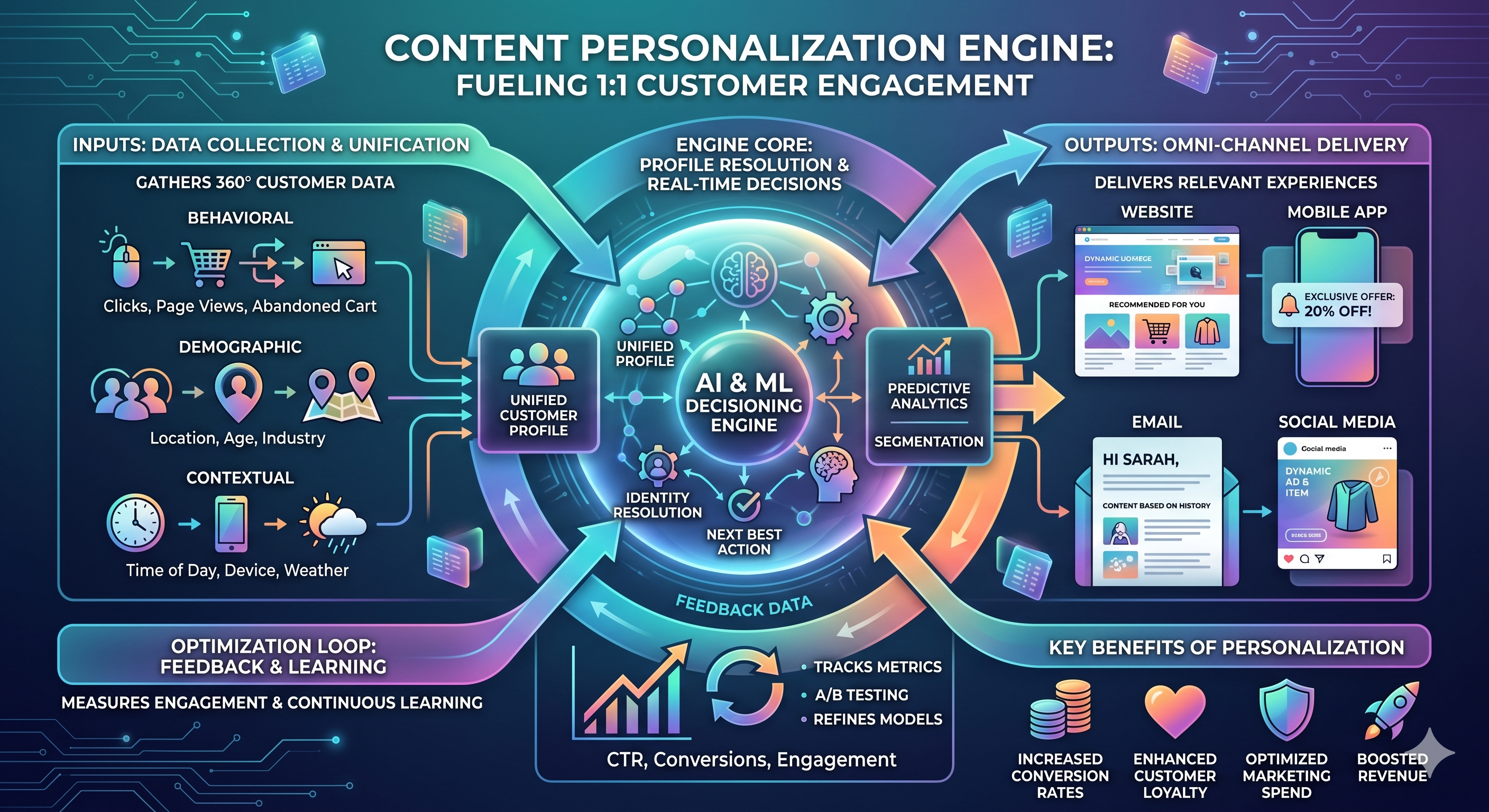
A Content Personalization Engine is a system that dynamically delivers personalized content based on customer behavior, contextual data, and real-time signals.
It determines:
- What content to display
- When to display it
- Which channel to use
- How to adapt the experience for each individual user
Unlike static systems, modern personalization engines continuously learn and evolve based on customer interactions.
Why Real-Time Experiences Matter
Modern customers expect instant relevance.
For example:
- A shopper viewing winter jackets expects related recommendations immediately
- A customer abandoning a cart expects a timely reminder
- A returning visitor expects continuity across channels
Delayed personalization creates friction and reduces engagement.
Real-time experiences improve customer satisfaction by making interactions feel seamless and responsive.
The Role of Real-Time Data
Real-time personalization depends heavily on live customer data.
This includes:
- Website browsing behavior
- Search queries
- Product interactions
- Cart activity
- Device and location context
As customer actions occur, the personalization engine processes these signals instantly and adjusts the experience accordingly.
Example
If a customer starts browsing running shoes, the engine can immediately:
- Update homepage recommendations
- Personalize search results
- Trigger dynamic email campaigns
- Display relevant promotions
This level of responsiveness creates stronger engagement.
How Content Personalization Engines Enable Real-Time Experiences
Unified Customer Profiles
Modern engines combine data from multiple channels to create a centralized customer profile.
This includes:
- Historical behavior
- Current session activity
- Cross-device interactions
- Purchase history
Unified profiles improve personalization accuracy.
Event-Driven Architecture
Real-time systems respond instantly to customer actions through event-driven processing.
For example:
- Clicking on a product triggers updated recommendations
- Search activity changes homepage content
- Cart additions activate promotional messaging
This reduces delays between customer intent and response.
AI and Machine Learning
Artificial intelligence helps personalization engines:
- Predict customer intent
- Optimize content selection
- Prioritize recommendations
- Adapt experiences continuously
Machine learning models improve performance over time.
Omnichannel Orchestration
Customers move across websites, apps, email, and social channels constantly.
A Content Personalization Engine ensures consistency across every touchpoint.
For example:
- Products viewed on mobile influence email recommendations
- Search behavior impacts app experiences
- In-store interactions affect online personalization
This creates seamless customer journeys.
Benefits of Real-Time Personalization
Increased Engagement
Relevant experiences encourage deeper interaction.
Faster Decision-Making
Customers find what they need more quickly.
Higher Conversion Rates
Real-time relevance improves purchase likelihood.
Improved Customer Retention
Consistent personalization strengthens long-term relationships.
Better Customer Experience
Responsive experiences create smoother customer journeys.
Key Use Cases Across Digital Commerce
Dynamic Homepage Personalization
Homepage content updates instantly based on user behavior and intent.
Personalized Product Recommendations
Recommendations adapt in real time according to browsing patterns and engagement.
Search Personalization
Search results change dynamically based on customer preferences and context.
Real-Time Email Personalization
Emails update based on live inventory, browsing behavior, and current offers.
Contextual Content Delivery
Messaging changes based on:
- Device type
- Geographic location
- Referral source
- Time of day
This improves relevance significantly.
Challenges Businesses Face
Data Fragmentation
Disconnected systems make real-time personalization difficult.
Infrastructure Complexity
Processing live customer signals requires scalable architecture.
Content Scalability
Real-time personalization requires adaptable and dynamic content structures.
Privacy and Compliance
Businesses must balance personalization with responsible data usage.
Best Practices for Building Real-Time Personalization Strategies
Invest in Unified Data Infrastructure
Connected customer data improves personalization accuracy.
Prioritize Speed and Scalability
Real-time experiences depend on low-latency systems.
Use AI Strategically
AI should improve relevance and automation without compromising user experience.
Focus on High-Impact Journeys
Start with personalization opportunities that directly influence conversions.
Continuously Optimize Experiences
Customer behavior evolves constantly, requiring ongoing testing and refinement.
The Future of Content Personalization Engines
The next generation of personalization engines will become even more intelligent and predictive.
Future trends include:
- AI-native personalization systems
- Predictive customer journey orchestration
- Real-time cross-channel activation
- Voice and visual personalization experiences
- Greater privacy-focused personalization models
As digital commerce continues evolving, personalization engines will become central to customer experience strategies.
Conclusion
The shift toward real-time experiences is fundamentally changing how businesses engage with customers. Static personalization strategies are no longer sufficient in a digital environment where consumers expect instant relevance and seamless interactions.
A Content Personalization Engine enables businesses to respond dynamically to customer behavior, unify experiences across channels, and deliver meaningful engagement at scale.
As competition intensifies and customer expectations continue to rise, organizations that invest in real-time personalization capabilities will be better positioned to improve engagement, increase conversions, and build long-term customer loyalty.