
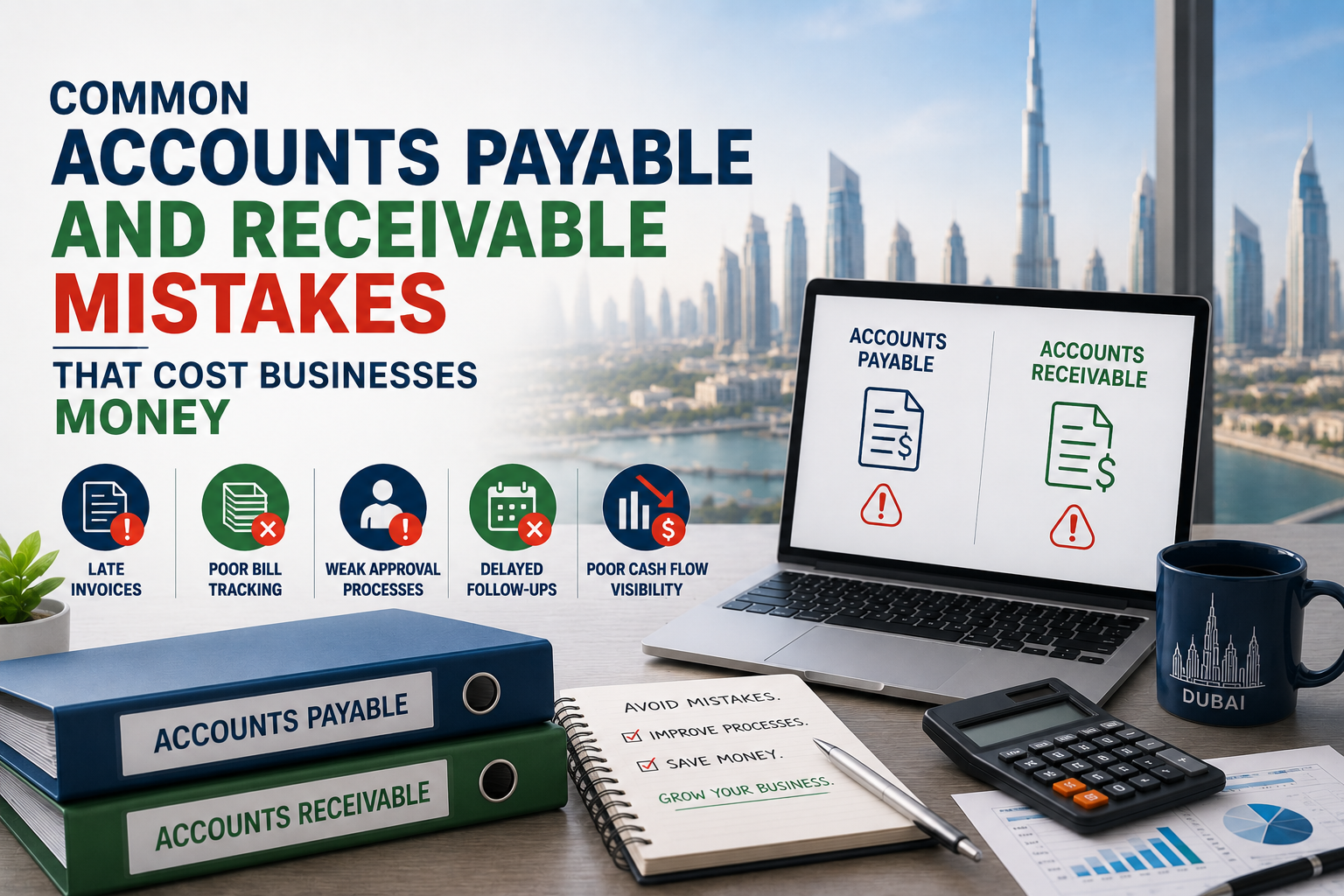
Effective financial management is essential for maintaining a healthy business. Regardless of size or industry, every organisation depends on efficient management of supplier payments and customer collections to maintain steady cash flow. However, even small errors in accounts payable (AP) and accounts receivable (AR) can result in financial losses, strained business relationships, delayed payments, and operational inefficiencies.
Many businesses underestimate the impact of accounts payable and receivable mistakes until they begin affecting profitability and day-to-day operations. Missed invoices, delayed collections, duplicate payments, and poor recordkeeping are just a few examples of issues that can reduce working capital and limit business growth.
This guide highlights the most common accounts payable and receivable mistakes businesses make, explains their consequences, and shares practical strategies to avoid them.
Why Accounts Payable and Receivable Management Matters
Accounts payable and receivable form the backbone of a company’s financial operations.
- Accounts Payable (AP) manages payments to suppliers and vendors.
- Accounts Receivable (AR) manages customer invoices and payment collections.
Together, these processes help businesses:
- Maintain healthy cash flow
- Build strong supplier relationships
- Improve customer payment cycles
- Support accurate financial reporting
- Strengthen working capital management
When these functions are poorly managed, financial performance often suffers.
1. Delaying Customer Invoices
One of the most common accounts payable and receivable mistakes is waiting too long to send invoices.
Late invoicing often results in:
- Delayed customer payments
- Reduced cash flow
- Longer payment cycles
- Increased collection efforts
How to Avoid It
- Issue invoices immediately after delivering products or services.
- Use automated invoicing systems.
- Include clear payment terms and due dates.
Prompt invoicing encourages faster payments.
2. Failing to Follow Up on Overdue Payments
Many businesses hesitate to remind customers about unpaid invoices.
Ignoring overdue accounts can lead to:
- Increased bad debts
- Cash flow shortages
- Reduced working capital
- Financial uncertainty
How to Avoid It
- Monitor receivables regularly.
- Send automated payment reminders.
- Establish a structured collection process.
- Follow up professionally and consistently.
3. Paying Supplier Invoices Late
Late supplier payments can damage valuable business relationships.
Consequences include:
- Late payment penalties
- Reduced supplier trust
- Delayed deliveries
- Loss of favourable payment terms
How to Avoid It
- Track invoice due dates.
- Schedule payments in advance.
- Maintain sufficient cash reserves.
- Use payment approval workflows.
4. Making Duplicate Payments
Duplicate payments are surprisingly common, especially in businesses using manual accounting processes.
They may occur because of:
- Duplicate invoices
- Data entry errors
- Poor communication
- Weak approval procedures
How to Avoid It
- Verify invoices before payment.
- Implement approval controls.
- Reconcile supplier accounts regularly.
- Use accounting software with duplicate detection.
5. Poor Recordkeeping
Incomplete or disorganised financial records make it difficult to monitor business performance.
Poor documentation can lead to:
- Missing invoices
- Payment disputes
- Audit difficulties
- Reporting inaccuracies
How to Avoid It
- Maintain organised digital records.
- Store invoices securely.
- Reconcile financial records regularly.
- Back up accounting data consistently.
6. Ignoring Cash Flow Planning
Many businesses focus only on profits while overlooking cash flow.
Without proper planning, businesses may struggle to:
- Pay suppliers
- Meet payroll obligations
- Fund daily operations
- Invest in growth
How to Avoid It
- Prepare regular cash flow forecasts.
- Monitor incoming and outgoing payments.
- Review cash flow reports monthly.
Strong cash flow planning improves financial stability.
7. Not Reconciling Accounts Regularly
Failing to reconcile accounts can allow financial errors to go unnoticed.
Common problems include:
- Missing payments
- Incorrect balances
- Duplicate transactions
- Unrecorded invoices
How to Avoid It
- Reconcile supplier accounts monthly.
- Match invoices with payments.
- Review customer account balances regularly.
Routine reconciliations improve financial accuracy.
8. Weak Credit Management
Offering credit without proper evaluation increases the risk of unpaid invoices.
Businesses may experience:
- Higher bad debts
- Late payments
- Collection difficulties
- Reduced profitability
How to Avoid It
- Assess customer creditworthiness.
- Set appropriate credit limits.
- Define clear payment terms.
- Monitor customer payment history.
Effective credit management reduces financial risk.
9. Relying on Manual Processes
Manual accounting increases the likelihood of human error.
Common issues include:
- Data entry mistakes
- Lost invoices
- Delayed approvals
- Slow reporting
How to Avoid It
- Automate invoice processing.
- Use cloud-based accounting software.
- Implement digital approval workflows.
- Integrate financial systems where appropriate.
Automation improves both efficiency and accuracy.
10. Not Seeking Professional Support
Many businesses attempt to manage accounts payable and receivable without sufficient accounting expertise.
This often results in:
- Financial inaccuracies
- Compliance issues
- Inefficient processes
- Poor cash flow management
How to Avoid It
Partner with experienced accounting professionals who can:
- Manage AP and AR processes
- Improve financial controls
- Prepare accurate reports
- Optimise cash flow
- Strengthen financial operations
Professional support reduces risk while improving overall efficiency.
The Financial Impact of AP and AR Mistakes
When accounts payable and receivable are not managed effectively, businesses may face:
- Cash flow shortages
- Lost revenue
- Higher operating costs
- Supplier disputes
- Customer dissatisfaction
- Reduced profitability
- Poor financial decision-making
Avoiding these issues helps create a stronger financial foundation.
Best Practices for Effective AP and AR Management
To minimise errors and improve financial performance, businesses should:
- Send invoices promptly.
- Verify supplier invoices before payment.
- Reconcile accounts regularly.
- Monitor overdue receivables.
- Establish clear payment policies.
- Automate repetitive accounting tasks.
- Review financial reports consistently.
- Maintain organised accounting records.
These best practices improve operational efficiency and reduce financial risk.
Who Can Benefit from Professional AP and AR Services?
Professional accounts payable and receivable management is valuable for:
- Startups
- Small and medium-sized enterprises (SMEs)
- Trading businesses
- Manufacturing companies
- Retail businesses
- E-commerce companies
- Healthcare organisations
- Professional service firms
Businesses of all sizes benefit from stronger financial controls and improved cash flow management.
Why Professional Services Make a Difference
Professional accounting specialists bring expertise, technology, and structured processes to accounts payable and receivable management.
They help businesses:
- Reduce accounting errors
- Improve invoice processing
- Strengthen internal controls
- Accelerate customer collections
- Manage supplier payments efficiently
- Improve financial reporting
- Optimise cash flow
Their support enables business owners to focus on growth while maintaining accurate financial operations.
Final Thoughts
Avoiding common accounts payable and receivable mistakes is essential for maintaining healthy cash flow, improving operational efficiency, and protecting business profitability. From issuing invoices promptly and paying suppliers on time to reconciling accounts regularly and automating financial processes, every improvement contributes to stronger financial management.
Whether you are a startup, an SME, or a large enterprise, professional support can help eliminate costly accounting errors and streamline your financial operations. Dubai Business and Tax Advisors (DBTA) provides expert accounts payable and receivable services that help UAE businesses improve financial accuracy, strengthen cash flow management, and build efficient accounting processes that support long-term growth.
-
Tags:

