
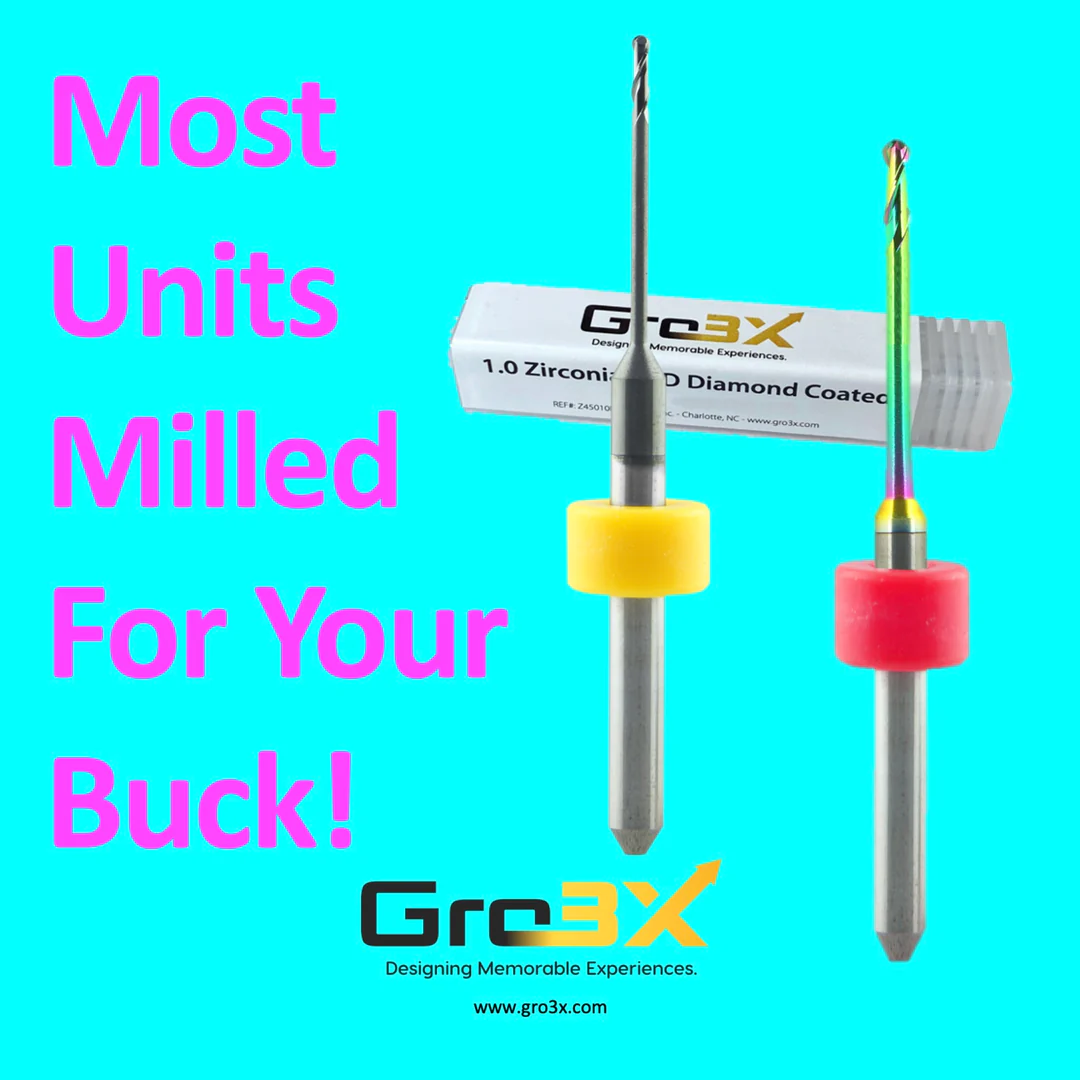
What Are the Trade-Offs When Choosing Cheaper inLab MC X5 Burs
In many dental labs, decisions around cost-cutting often start with a simple assumption that cheaper tools help protect margins in high-volume production. On paper, that logic looks solid. But once these burs enter real milling cycles, the situation shifts quickly. Technicians begin noticing edge wear earlier than expected, subtle surface inconsistencies, and increased correction work that was never part of the original plan, especially when working with inLab MC X5 Burs.
The real issue is not the purchase price, but how these tools behave under continuous load, especially when paired with demanding materials and tight turnaround schedules. What starts as a small cost saving can quietly introduce friction into daily output, affecting both machine stability and restoration quality.
As these patterns build across multiple production runs, labs often find themselves spending more time managing tool limitations than focusing on output consistency. This sets up a deeper discussion around where cheaper tooling fits and where it starts creating operational pressure.
Material Behavior Under Continuous Milling Loads
When evaluating inLab MC X5 Burs, material composition plays a central role in how tools behave under sustained milling cycles. Lower cost burs often rely on simplified carbide blends or less controlled grain structures, which directly affects edge retention. Under repeated contact with zirconia or hybrid ceramics, these materials tend to degrade faster, leading to rounding at the cutting edge.
This degradation changes how force is distributed during milling. Instead of clean material removal, the bur begins to drag, increasing heat generation and placing additional stress on both the tool and the milling unit. Over time, this can influence spindle performance and introduce variability across production runs. In contrast, higher-grade tools maintain structural integrity longer, which stabilizes output across batches.
Tool Wear Patterns and Surface Output Quality
Early Stage Wear Indicators
With inLab MC X5 Burs, early wear is not always visible to the naked eye. Microscopic edge breakdown begins before technicians notice any decline in output. However, the effects appear in subtle ways, such as slight surface roughness or minor deviations in contour.
As wear progresses, these issues become more pronounced. Marginal integrity starts to suffer, requiring manual correction. This not only increases labor time but also introduces inconsistency between units.
Mid Cycle Degradation Effects
At mid-life stages, cheaper tools often exhibit uneven wear across flutes. This leads to vibration during milling, which directly affects surface finish. In materials like Aidite Biomic, this can result in microchipping along critical edges.
Such inconsistencies are particularly problematic in restorative work where fit and finish are tightly controlled. Even small deviations can lead to remakes, increasing both material usage and turnaround time.
End of Life Failure Risks
Toward the end of their usable life, inLab MC X5 Burs may fail unpredictably. Breakage risks increase, especially under aggressive milling parameters. This creates potential for machine downtime and possible damage to partially completed restorations.
Without a structured monitoring system, many labs continue using tools beyond their optimal range, amplifying these risks.
Workflow Disruptions Linked to Tool Changes
Frequent tool replacement is one of the most overlooked consequences of using lower-cost inLab MC X5 Burs. While individual tools may appear economical, their shorter lifespan introduces repeated interruptions in daily operations.
Key workflow impacts include:
- Increased machine idle time during tool swaps
- Higher dependency on technician oversight
- Disruption in batch processing schedules
- Greater likelihood of setup inconsistencies
- Additional calibration requirements
These interruptions reduce overall throughput. In environments processing materials like Aidite Biomic, consistency across runs is critical, and frequent disruptions introduce variability that is difficult to control.
Over time, the cumulative effect of these small inefficiencies can outweigh the initial cost savings, particularly in labs operating at scale.
Cost Per Unit Versus Cost Per Outcome
Direct Cost Illusion
The upfront price of the inLab MC X5 Burs often drives purchasing decisions. However, focusing solely on unit cost ignores the broader economic picture. A lower price per bur does not necessarily translate to lower operational expense.
When evaluating cost, factors such as tool lifespan, output quality, and rework rates must be considered. Cheaper tools may require more frequent replacement, which increases total consumption over time.
Hidden Operational Expenses
Beyond direct replacement costs, several indirect expenses emerge:
- Increased labor for adjustments and corrections
- Higher material waste due to failed restorations
- Machine wear from inconsistent cutting forces
- Delays in delivery timelines
In materials like Aidite Biomic, where structural integrity is critical, these indirect costs become even more significant. Poor tool performance can compromise the final restoration, leading to additional cycles of production.
When viewed holistically, the total cost of ownership for cheaper tooling often exceeds initial expectations.
Compatibility with Advanced Milling Materials
Modern dental materials such as Aidite Biomic demand consistent cutting performance to maintain structural and aesthetic standards. Not all inLab MC X5 Burs are engineered to handle these requirements effectively.
Lower grade burs may struggle with:
- Maintaining edge sharpness across dense materials
- Managing heat buildup during extended milling
- Producing consistent surface finishes
This creates a mismatch between material capability and tool performance.
Key considerations when pairing tools with advanced materials include:
- Material density and hardness
- Required surface finish quality
- Milling strategy and speed
- Tool geometry compatibility
Using inadequate tooling with high-performance materials increases the risk of defects and reduces overall efficiency.
In labs working extensively with Aidite Biomic, selecting the right tool becomes less about cost and more about maintaining consistent output across every unit.
Data Driven Approach to Tool Selection
Adopting a data-driven approach can significantly improve decision-making around inLab MC X5 Burs. Rather than relying on price alone, labs can track performance metrics to evaluate true value.
Important metrics include tool lifespan in hours, number of units processed per bur, and frequency of rework. By analyzing this data, patterns begin to emerge, allowing for more informed purchasing decisions.
Additionally, documenting performance across different materials, such as Aidite Biomic, helps identify which tools provide stable results under specific conditions. This reduces guesswork and supports consistent production outcomes.
Over time, this approach shifts tool selection from reactive purchasing to structured evaluation, aligning cost decisions with actual performance data.
Conclusion
Short-term savings often carry long-term consequences that only become visible under sustained production pressure. The choice of inLab MC X5 Burs influences far more than tool inventory; it directly affects workflow stability, material usage, and output consistency. Labs that rely on structured evaluation rather than price alone tend to maintain better control over both quality and cost.
This perspective is common among experienced teams that align their processes with trusted supply ecosystems, much like professionals who use platforms such as Gro3X to assess materials, tools, and operational inputs. In environments where materials like Aidite Biomic are standard, the margin for inconsistency narrows, making tool selection a critical operational decision rather than a simple purchase.
Frequently Asked Questions (FAQs)
1. Can cheaper tools damage milling machines?
Yes, extended use of low-grade inLab MC X5 Burs can increase mechanical stress on machine components.
2. Do all burs perform the same with zirconia?
No performance varies significantly depending on material composition and tool design.
3. Is Aidite Biomic harder to mill than other materials?
Aidite Biomic requires stable cutting performance due to its structural properties.
4. How often should burs be replaced?
Replacement depends on usage data, but worn tools should not exceed their effective range.
5. Does the tool price reflect quality?
Not always, but consistent performance data often reveals the true value of tooling choices.

