
Plastic plays a vital role across manufacturing, packaging, automotive, construction, healthcare, and consumer goods industries. However, the increasing volume of plastic waste has created significant environmental and operational challenges for businesses worldwide. Rather than treating plastic waste as a disposal problem, many organizations are now investing in industrial plastic waste recycling to recover valuable materials, reduce landfill dependence, and improve sustainability outcomes.
Modern industrial plastic waste recycling systems combine advanced mechanical processing, automated sorting, washing, shredding, and granulation technologies to transform used plastics into reusable raw materials. These recycled materials can then be reintroduced into manufacturing, reducing the need for virgin plastic while supporting circular economy initiatives. OGTEC designs integrated plastic recycling systems capable of processing materials such as PET, HDPE, and LDPE through sorting, cleaning, shredding, washing, and granulating processes.
What Is Industrial Plastic Waste Recycling?
Industrial plastic waste recycling is the process of collecting, separating, processing, and converting plastic waste generated by industrial and commercial operations into reusable materials.
Typical plastic waste sources include:
- Manufacturing offcuts
- Packaging materials
- Plastic containers
- Production scrap
- Warehouse waste
- Commercial plastic films
- Post-industrial plastics
Instead of sending these materials to landfill, recycling systems recover them for future manufacturing applications.
Why Industrial Plastic Waste Recycling Is Important
As industries generate larger volumes of plastic waste, recycling has become an essential component of sustainable operations.
Major benefits include:
- Reduced landfill disposal
- Conservation of raw materials
- Lower production costs
- Reduced environmental impact
- Improved resource recovery
- Support for circular economy initiatives
Efficient recycling systems help businesses improve both environmental performance and operational efficiency.
How Industrial Plastic Recycling Works
Modern recycling plants use multiple processing stages to recover high-quality recycled plastic.
Collection and Sorting
Plastic waste is collected and separated according to polymer type, colour, and contamination levels using advanced sorting technologies.
Shredding
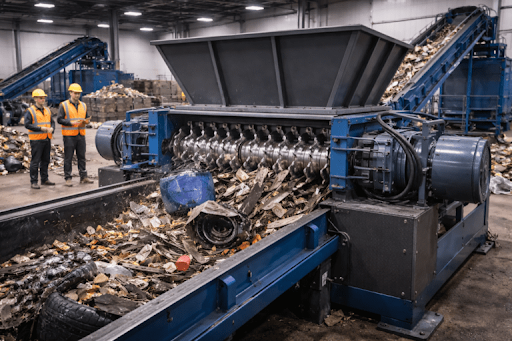
Industrial shredders reduce large plastic items into smaller pieces that are easier to process.
Washing and Cleaning
Specialized washing systems remove labels, dirt, adhesives, and contaminants to improve recycled material quality.
Granulation and Pelletizing
Clean plastic flakes are processed into granules or pellets that can be reused as raw materials in manufacturing. OGTEC’s recycling systems integrate these processing stages to maximize material purity and throughput while minimizing waste.
Industries That Benefit from Plastic Recycling
Many sectors rely on industrial plastic waste recycling to improve sustainability and reduce operating costs.
Manufacturing
Factories recycle production scrap and defective plastic components back into manufacturing processes.
Packaging
Plastic films, containers, and packaging materials are recovered for reuse in new packaging products.
Logistics and Warehousing
Warehouses generate significant quantities of stretch wrap, pallets, and plastic packaging suitable for recycling.
Consumer Goods
Manufacturers increasingly incorporate recycled plastics into new products to reduce reliance on virgin materials.
Technologies Driving Modern Plastic Recycling
Advanced recycling facilities combine several technologies to improve recovery rates.
These include:
- Optical sorting systems
- Automated conveyors
- Magnetic separation
- Artificial intelligence
- Robotic sorting
- High-performance washing systems
- Granulation equipment
Automation improves consistency while reducing manual labour requirements and contamination levels.
Factors to Consider When Selecting a Plastic Recycling System
Every recycling facility has unique processing requirements.
Important considerations include:
- Plastic types being processed
- Required production capacity
- Contamination levels
- Available floor space
- Automation requirements
- Energy efficiency
- Future scalability
Customized recycling systems often deliver greater long-term efficiency than standardized equipment.
Environmental and Business Benefits
Investing in industrial plastic waste recycling provides numerous long-term advantages.
Organizations can:
- Lower waste disposal costs
- Increase resource recovery
- Reduce carbon emissions
- Improve operational productivity
- Meet sustainability objectives
- Strengthen regulatory compliance
High-quality recycling systems also improve material recovery rates while producing cleaner recycled raw materials suitable for manufacturing.
The Future of Plastic Recycling
Recycling technology continues to evolve with artificial intelligence, robotics, and automated material recognition systems becoming increasingly common. Advanced recycling plants now process multiple plastic streams with greater speed, accuracy, and efficiency than ever before. Combined with broader resource recovery strategies, these innovations help industries recover more valuable materials while supporting long-term environmental goals. OGTEC also develops integrated resource recovery facilities that combine recycling technologies with tailored processing solutions for multiple industrial waste streams.
Conclusion
Implementing industrial plastic waste recycling systems enables organizations to recover valuable materials, reduce landfill dependence, improve operational efficiency, and support circular economy initiatives. Businesses seeking to build more sustainable operations should also consider integrating industrial waste management strategies that combine efficient material recovery, automation, and resource optimization into a comprehensive waste management program. As sustainability continues to influence industrial operations, investing in advanced recycling technologies has become an important step toward long-term environmental and economic success.

