
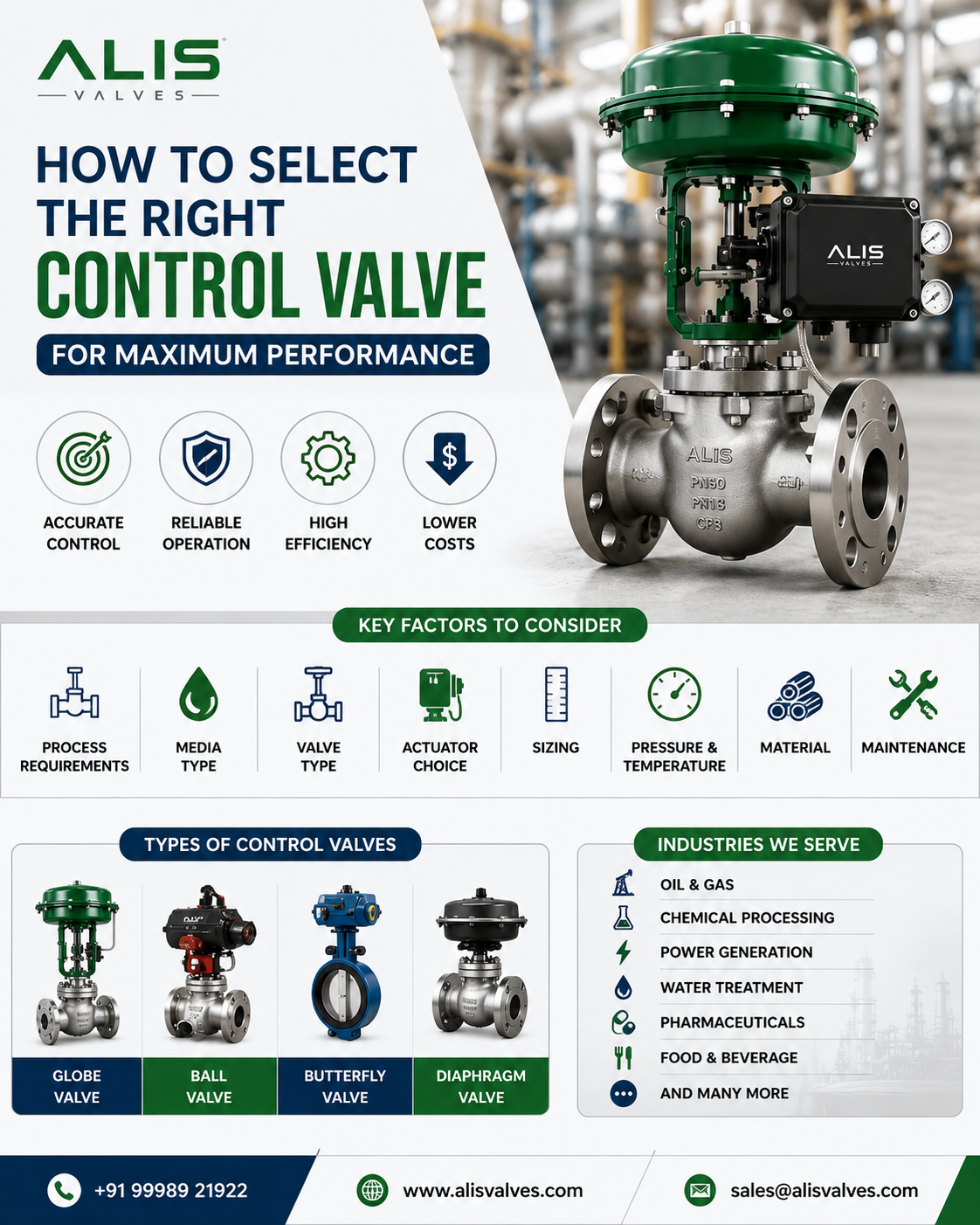
Selecting the right Control Valve is one of the most important decisions in any industrial process. A properly chosen Control Valve improves system efficiency, enhances safety, reduces maintenance costs, and ensures consistent product quality. Whether used in chemical processing, oil and gas, pharmaceuticals, water treatment, or power generation, the correct valve selection directly impacts plant performance.
With many valve designs, actuator options, and materials available, understanding the selection process is essential. This guide explains the key factors to consider when choosing the ideal Control Valve for maximum performance.
What Is a Control Valve?
A Control Valve is an automated valve that regulates the flow of liquids, gases, steam, or other process media by adjusting the valve opening according to signals from a controller. It acts as the final control element in an automation system, maintaining desired pressure, temperature, flow rate, or liquid level.
A well-selected Control Valve helps industries achieve stable operations, higher productivity, and lower operating costs.
Why Proper Control Valve Selection Matters
Using an incorrectly sized or unsuitable Control Valve can lead to several operational problems, including:
- Poor flow control
- Excessive energy consumption
- Equipment wear
- Valve noise and vibration
- Frequent maintenance
- Reduced product quality
Choosing the right Control Valve ensures smooth operation, improved efficiency, and long service life.
Step 1: Understand the Process Requirements
Before selecting a Control Valve, evaluate the operating conditions of your process.
Consider the following:
- Flow rate
- Operating pressure
- Temperature range
- Maximum and minimum load
- Type of process fluid
Understanding these parameters ensures the selected valve can perform efficiently under actual operating conditions.
Step 2: Identify the Process Media
The characteristics of the process media play a major role in selecting the correct Control Valve.
Questions to consider include:
- Is the fluid corrosive?
- Does it contain solid particles?
- Is it steam, gas, or liquid?
- What is its viscosity?
- Is sanitary service required?
For corrosive chemicals, PTFE-lined or stainless steel valves may be preferred, while hygienic industries often use diaphragm valves.
Step 3: Choose the Right Valve Type
Different applications require different Control Valve designs.
Globe Control Valve
Best for:
- Precise flow regulation
- Steam applications
- High-pressure systems
Ball Control Valve
Suitable for:
- Fast shut-off
- High flow capacity
- Industrial automation
Butterfly Control Valve
Ideal for:
- Large pipelines
- Water treatment
- HVAC systems
Diaphragm Control Valve
Recommended for:
- Pharmaceutical industries
- Food processing
- Corrosive fluids
Selecting the appropriate Control Valve type ensures better process performance and reliability.
Step 4: Select the Correct Actuator
The actuator controls the movement of the Control Valve. Choosing the right actuator depends on the automation level and operating environment.
Pneumatic Actuator
Advantages:
- Fast response
- Reliable performance
- Safe for hazardous areas
Electric Actuator
Advantages:
- High positioning accuracy
- Easy remote operation
- Integration with PLC and SCADA systems
Hydraulic Actuator
Advantages:
- High operating force
- Heavy-duty applications
- Large valve operation
Selecting the correct actuator helps maximize the efficiency of the Control Valve.
Step 5: Consider Valve Material
Material selection is critical for extending the life of a Control Valve.
Common materials include:
- Stainless Steel
- Carbon Steel
- Cast Iron
- Alloy Steel
- Bronze
- PTFE-lined construction
Choose materials based on corrosion resistance, pressure rating, temperature, and process compatibility.
Step 6: Valve Sizing
Proper sizing is one of the most important aspects of Control Valve selection.
An oversized valve may:
- Cause unstable control
- Reduce accuracy
- Increase maintenance
An undersized valve may:
- Restrict flow
- Increase pressure drop
- Reduce system capacity
Correct valve sizing ensures smooth operation and maximum efficiency.
Step 7: Pressure and Temperature Ratings
Always verify that the selected Control Valve meets the required pressure class and temperature limits.
Typical pressure classes include:
- Class 150
- Class 300
- Class 600
- PN10
- PN16
- PN25
- PN40
Matching pressure ratings prevents premature valve failure and improves operational safety.
Step 8: Flow Characteristics
Different Control Valve designs provide different flow characteristics.
Common options include:
- Linear
- Equal Percentage
- Quick Opening
Selecting the appropriate flow characteristic improves control accuracy and process stability.
Step 9: Automation Compatibility
Modern manufacturing facilities require smart automation systems.
Choose a Control Valve that supports:
- PLC integration
- DCS compatibility
- SCADA communication
- Digital positioners
- Smart diagnostics
Automation-ready valves improve monitoring, predictive maintenance, and operational efficiency.
Step 10: Maintenance Requirements
Maintenance costs significantly affect the total ownership cost of a Control Valve.
Consider:
- Spare part availability
- Ease of servicing
- Actuator accessibility
- Seal replacement
- Reliability history
A low-maintenance valve reduces downtime and increases plant productivity.
Industrial Applications
A Control Valve is used in numerous industries.
Oil and Gas
Controls fuel, gas, and process fluids under demanding operating conditions.
Chemical Processing
Provides accurate chemical dosing and reaction control.
Water Treatment
Regulates filtration, pumping, and distribution systems.
Power Generation
Controls steam, cooling water, and boiler operations.
Pharmaceutical Industry
Maintains hygienic and contamination-free process control.
Food and Beverage
Ensures accurate ingredient flow and sanitary operation.
Benefits of Choosing the Right Control Valve
Selecting the proper Control Valve offers numerous advantages:
- Improved process efficiency
- Better flow regulation
- Reduced energy consumption
- Longer equipment life
- Enhanced operational safety
- Lower maintenance costs
- Higher product quality
- Reliable automation performance
These benefits contribute directly to higher productivity and lower operating expenses.
Common Mistakes to Avoid
Avoid these common errors when selecting a Control Valve:
- Choosing the wrong valve size
- Ignoring process media compatibility
- Selecting an unsuitable actuator
- Overlooking pressure ratings
- Failing to consider maintenance requirements
- Ignoring future automation needs
Careful evaluation helps prevent costly replacements and operational issues.
Conclusion
Selecting the right Control Valve is essential for achieving maximum industrial performance. From understanding process conditions and fluid characteristics to choosing the correct valve type, actuator, material, and size, every decision influences efficiency and reliability.
A properly selected Control Valve improves process stability, reduces operating costs, enhances automation, and increases equipment lifespan. Whether your application involves water treatment, chemical processing, power generation, pharmaceuticals, or oil and gas, investing time in choosing the right Control Valve will deliver long-term operational benefits and reliable performance.
-
Tags:

pakagristore
Pak Agri Store is a trusted place for farmers in Pakistan to find tractors, agricultural machinery, farm equipment, and useful farming products. We aim to make it easier for farmers to find the right equipment for their fields and daily farming needs.
