
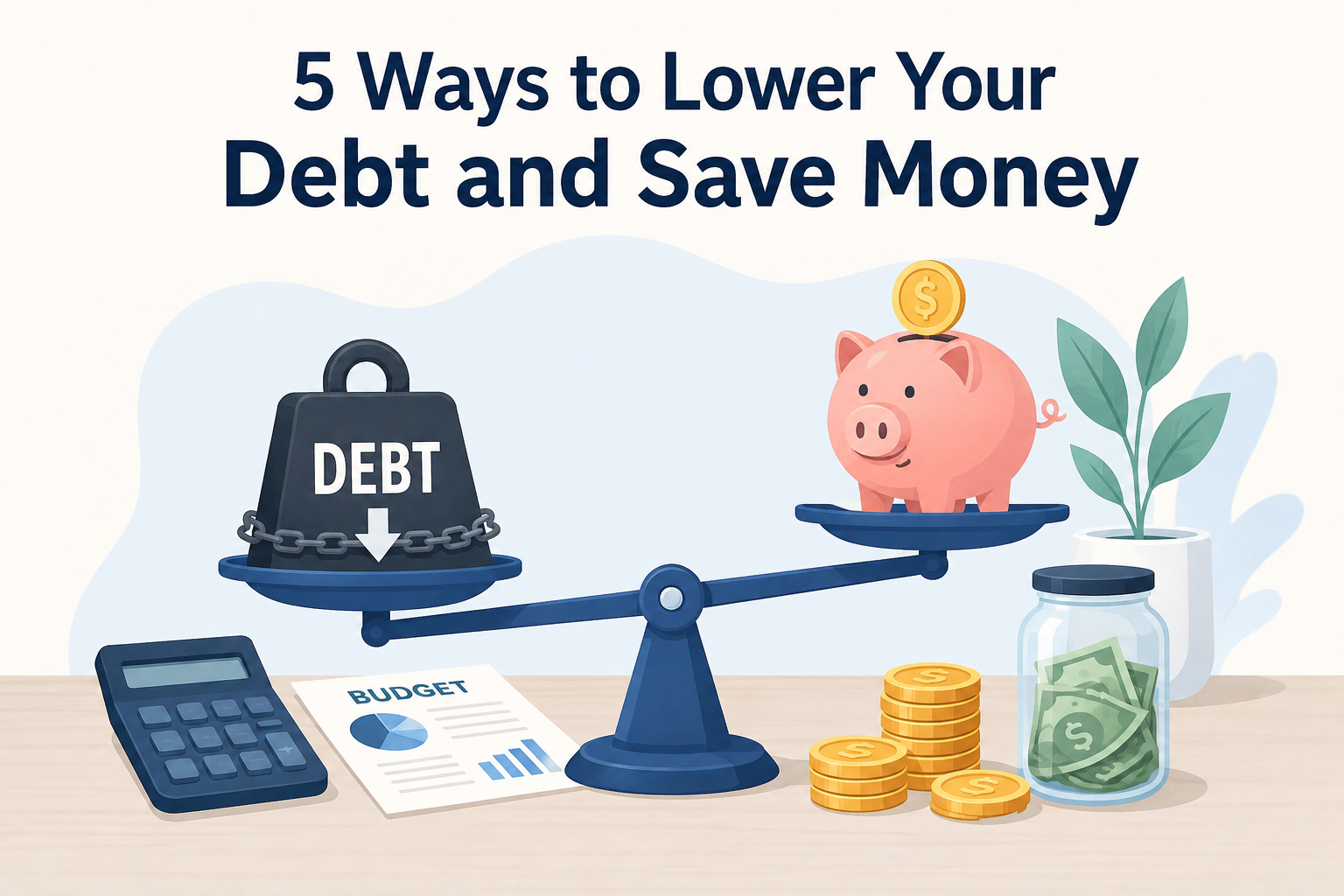
If you have amassed a significant amount of debt and are thinking that it is impossible to tackle payments now, you should consider coming up with a strategy to lower your debt. If you do not address this alarming situation soon, you will end up plunging into insurmountable debt.
It is crucial to pay off a couple of debts, so your budget has some room to comfortably tackle the remaining debt. Experts suggest starting with short-term high-cost debts. Since they are discharged in one fell swoop and charge very high interest rates, you should pay them off first. This will help you save a lot of money in the long run.
Strategies to lower your debt and save money in the long run
Here is what you need to do to reduce your debt:
Restructure your payment plan
Talk to your lender and ask them if they can offer you a new repayment plan. Inform them of your true financial condition. They will assess your income before deciding on a repayment plan.
It is not guaranteed that they will put you on another repayment plan. If you are unable to make payments due to unemployment, they can offer you a payment holiday or a minimum payment plan. This could give you some space to manage your expenses, but interest will be accrued on the unpaid amount.
Apply for a balance transfer card
It is hard to bring lenders around to change your repayment plan, but there are other methods to reduce or manage your debt. If you have credit card debt, you can apply for a 0% balance transfer card. This cannot reduce the amount of credit card debt, but it makes payments manageable.
By transferring your credit card balance, you will have only one repayment date instead of multiple, and you do not have to pay off the whole debt at one shot. You will be given an introductory period, which is called an interest-free period. If you manage to pay off the whole balance within that period, you do not have to pay interest. However, a 0% credit card is offered to those whose credit score is stellar.
Consider a consolidation loan
If you have short-term high-cost debt, you might find consolidation best. Consolidation means combining all your short-term high-cost debts into one large personal loan. For instance, if you have payday loans, very bad credit loans, emergency loans, and quick loans, you can take out a personal loan to repay them once and for all.
The biggest benefit of consolidation is that you will have only one personal loan to pay off. They are more affordable than lump sum loans as they are paid back in fixed monthly instalments. At the time of consolidation, bear in mind that you must have a good credit score. Most lenders approve these loans to borrowers with a good credit rating, but there is still a possibility of qualifying for a debt consolidation loan with very bad credit from a direct lender.
Stop using credit cards
If you want to reduce your debt, you will have to stop accumulating it. After transferring your credit card balance, your old cards remain open and show a zero balance. They do not close automatically. If you keep using those credit cards for impulsive buying, you will again fall into credit card debt. It is essential that you foster good spending behaviour.
It is recommended that you do not use them unless you pay off the whole debt. If you still want to use your credit card, ensure that you will pay off the balance in full.
Pay more than the minimum balance
If you have outstanding balances on multiple credit cards, you might struggle to repay them. Most credit card companies put you on a minimum repayment plan. Do not fall into the trap of a minimum repayment plan, as this will hurt your financial condition in the long run. This plan cannot save you from interest rates on the unpaid balance. Therefore, it is vital to pay more than the minimum payment.
Tips to manage your money
In order to reduce your debt amount, you need to understand where you stand. If you do not manage your finances, you will not be able to deal with debt.
Create a budget
Creating a budget is essential because it helps you track your expenses. Budgeting helps foster discipline in you, so you spend only on essential expenses.
Make a list of your income and expenses. Deduct expenses from your income. If you are left with some income, you can utilise it to pay off your debt.
Make sure that you stay within your budget every month, so your debt settlement journey never halts due to poor cash flow.
Earn more money
You should try to increase your income to discharge your debts as soon as possible. You can find another job with a higher salary. If that is not possible, get a side gig. Money you earn through a side gig can be used to settle your debts.
Cut back on your expenses
You should try to trim your expenses, so you have more money to pay off your debt. There are various ways to slash your expenses.
- If you are eating out too much, you should stop it. Dine-out once in a while is OK; it is advised against discretionary expenses unless you settle the whole debt.
- Is there a possibility of reducing a utility bill? You can reduce heating bills by putting on extra layers and by eating hot food and beverages.
Seek debt advice if you cannot handle your debts. A debt management plan might come in handy.
The bottom line
If you owe too much debt, it can be hard to deal with it. Try to apply for a 0% balance transfer card or consolidation loan. Do not rack up more credit card debt by using them. Consider using a debt management plan or debt settlement. Debt consultants can offer you better advice.

